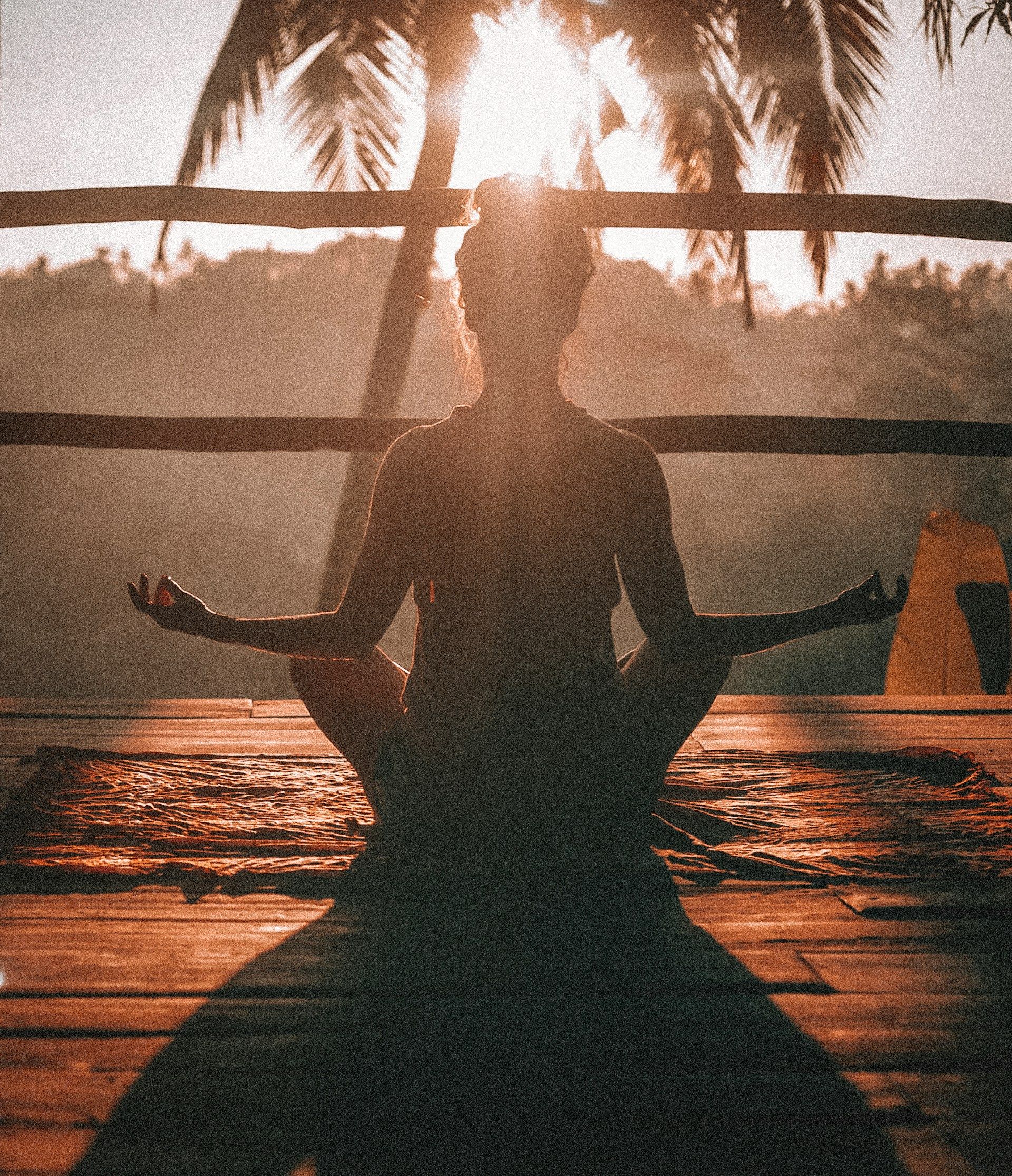
Top 10 Book Recommendations for Those Healing by Talking to Their Mats

Jennifer Stanley • April 7, 2025

Even if you can't access a therapist, help may be a bookshelf away.

Among the things I value most about my therapist are her awesome book recommendations. As someone who is neurodiverse, I process information best when I have time to learn and absorb it independently. Sometimes, I even read while I talk to my mat! 


In that spirit, I wanted to share ten of my favorite books that have helped me immensely in my recovery process. These all hold coveted spots on my Kindle, and I hope you’ll find them useful in your healing process, too. 


1. The Body Keeps the Score by Bessel Van Der Kolk, MD 

Traumatic stress doesn’t only live in your brain. It remains trapped in your body, but healing practices, including yoga, can help release it. Bessel Van Der Kolk is a pioneer in dealing with PTSD and CPTSD. Learning about how what happens to you affects your physical self can deepen the work you do on the mat. 


2. In the Realm of Hungry Ghosts by Gabor Mate, MD 

What causes addiction? Gabor Mate digs deep beyond the physiological reality and social stigma surrounding addiction to answer what causes people to get hooked in the first place. The answer is an attempt to escape the pain of trauma, often repeated trauma. Mate’s approach begins with self-compassion and the understanding that such individuals have so often lacked. 


3. Trauma and Recovery: The Aftermath of Violence—from Domestic Abuse to Political Terror by Judith Herman, MD

Herman does a phenomenal job of explaining how coercive control creates trauma and drawing parallels between violence inside the home and in the larger political arena and world. Her female perspective is a necessary breath of fresh air in a male-dominated profession. It’s a must-read for everyone, especially for female victims of sexual assault who feel their experiences often go unvalidated. 


4. Healing from Hidden Abuse: A Journey Through the Stages of Recovery From Psychological Abuse by Shannon Thomas, LCSW 

Toxic people don’t only harm with their fists. Repetitive mind games can cause severe trauma, and the pain often compounds when outsiders fail to see the problem. From the outside, it looks like a healthy family or workplace, but this hidden abuse silently torments victims. The book includes a reflective journal to help you to break free. 


5. Healing Trauma: A Pioneering Program for Restoring the Wisdom of Your Body by Peter A. Levine, PhD

Trauma can cause lifetime problems that often manifest in mental illness and can progress to physical disease. Peter Levine digs deep into the physiological roots of your emotional reactions, helping you renegotiate and heal traumas through the somatic self. It includes methods for identifying and working with your symptoms to treat trauma at its source. 


6. Complex PTSD: From Surviving to Thriving: A Guide and Map for Recovering from Childhood Trauma by Peter Walker, LMFT 

Complex PTSD isn’t recognized as a unique disorder as of yet in the DSM, but it holds its own unique category in the ICD-11. Unlike PTSD arising from a singular traumatic event, CPTSD arises from prolonged entrapment in an inherently unsafe situation where the traumas never stop. It may occur from prolonged child abuse, domestic violence, indoctrination into a cult, or other false imprisonment, and it takes a unique toll on your psychological makeup. Walker offers real-life examples and practical exercises for returning to your sense of self. 


7. The Complex PTSD Workbook: A Mind-Body Approach to Regaining Emotional Control and Becoming Whole by Arielle Schwartz, PhD

People with CPTSD often feel as if something is fundamentally wrong or broken with them. Finding healing isn’t easy, especially in a nation that paywalls access to basic healthcare. However, if you can get your hands on this book, you’ll unlock exercises, the introduction to various types of somatic therapy, and countless journal prompts that you can use with your therapist — or without one — to further your healing. 


8. Somatic Therapy for Healing Trauma by Jordan Danin, LP

What is somatic therapy? Hint: If you’ve ever tuned into one of Only in Sedona Yoga’s videos, you’ve engaged in it! However, it’s much more than only yoga, although that is one of the many techniques you’ll learn about in this book. 


9. Buddha’s Brain: The Practical Neuroscience of Happiness, Love and Wisdom by Daniel J. Siegel MD and Jack Kornfield PhD 

For many people, their healing journey contains a spiritual component. Siegel and Kornfield do an incredible job of explaining the science of mindfulness, how it intersects with the latest neurobiological research and offers practical insights into ways to make every day of this crazy existence a little happier. 


10. Overcoming Trauma Through Yoga: Reclaiming Your Body by David Emerson and Elizabeth Hopper, PhD

Far too many trauma survivors don’t feel safe anywhere, including in their own skin. This book is all about reclaiming your right to self by talking to your mat. With an introduction by none other than Bessel Van Der Kolk himself, the authors take a science-based approach to using this ancient practice to create a lost sense of safety. 


Top Ten Book Recommendations for Healing by Talking to Your Mat

The ten books above have transformed my life for the better. I hope they do the same for you. I’ve intentionally kept my description of each brief, but I consider each one essential reading. 


We at Only in Sedona Yoga believe healing is possible, and the power to do so ultimately comes from inside of you. While it certainly helps to have more resources at your disposal, it is absolutely possible to start on your journey with little more than a library card and a genuine desire to create a happier, healthier, and more peaceful existence. You deserve to feel your best, so give yourself the gift of inspiration today. May these books be as useful on your journey as they have been on mine. 


Tired at work? Try this miniyoga retreat at your desk
By Jennifer Stanley July 28, 2026
These five moves are a mini-yoga retreat you can do at work anytime without leaving your desk. Impress your boss while feeling better, body, mind and spirit.
Smilingwoman
By Jennifer Stanley July 20, 2026
It need not take long to regulate your nervous system and give your mood a positive boost. Try one of these eight tricks to revitalize your spark and smile.
A purple cabbage is sitting on top of a wooden cutting board surrounded by other vegetables.
By Jennifer Stefanow July 13, 2026
Can’t Sleep? Try This Evening Ritual (Updated for 2026) Written by Jennifer Stanley Few things in life are psychologically harder to cope with than insomnia. You know sleeplessness is going to affect you the next day. Worse is the anxiety that builds when it strikes night after night. You stumble through waking life like a zombie but curse the sight of your bedroom ceiling through your open eyelids at night. Although scientists don’t fully understand why living creatures need sleep, they know it harms your health when you don’t get enough. You become more accident prone, and your risk of various diseases increases. Plus, you get moody and snap at loved ones, straining your relationships As someone who struggles with insomnia, I empathize. While nothing health-related is guaranteed, certain habits and practices can nevertheless make it easier to get your Zzz’s. Try parts or all of this evening ritual the next time you can’t sleep or, worse, suffer a stretch of insomnia. What’s Causing Your Insomnia? Get Mindful Finding the root cause of your insomnia might be a no-brainer. An ailing loved one, a struggling relationship, work woes, financial troubles — all can impact sleep quantity and quality. If difficult life circumstances underpin your insomnia, radically accepting that you might find it hard to sleep for a while can sometimes, ironically, help. If not, at least it stops that nagging anxiety-choir of “what’s wrong with me, I’m exhausted, I know I need rest.” Acknowledging, “Hey, anyone would be struggling right now,” can be just the shot of loving-kindness your weary soul needs, and while it’s no substitute for eight solid hours, it’s better than fighting a losing battle with dreamland. Medicine, Food, and Hormones, Oh, My! At other times however, your insomnia might arise from physical or environmental factors you may not have considered. For example, medications as diverse as beta blockers [1], antidepressants and even cold tablets can affect sleep. Undiagnosed food allergies can likewise affect slumber by raising histamine levels [2] that promote wakefulness. If you suspect a sensitivity but can’t afford testing, the elimination diet method can sometimes pinpoint a culprit. Be patient and methodical, as it can take a while if you’re sensitive to something outside of the Big 8. Hormones are also a factor — shout out to my other 50-somethings experiencing night sweats. High cortisol levels are a common offender [3], hence, why it’s harder to sleep during life’s most stressful moments. However, keep in mind that changes in other hormonal levels, such as estrogen [4], can also cause cortisol fluctuations. If possible, consider a consultation with your doctor. If primary care offers few answers, a qualified naturopath or other holistic health practitioner may take more time to go over all over your symptoms and your life history to establish a course of care. Examine Your Daily Routine How you pace your day influences how well you sleep at night. In general, you want to tackle your toughest mental and physical activities soon after waking, taking on less stressful activities as you get closer to bedtime. Recently, some people have reported terrific success using the 10-3-2-1-0 sleep rule. What Is the 10-3-2-1-0 Sleep Rule? Dr. Jess Andrade, sports medicine physician, explains the 10-3-2-1-0 sleep rule [5] as a guide of activities to cease at specific intervals before bedtime to encourage more restful sleep. It works like this: Stop drinking caffeine 10 hours or more before bedtime. Caffeine blocks your adenosine receptors [6], a body chemical that builds up over the course of the day, making you sleepy. Finish your last big meal at least three hours before bed. Digestion can stimulate you, keeping you awake, and lying down too quickly after eating can trigger gastric reflux. Stop all work activities at least two hours before bed and begin your evening ritual. Turn off all screens at least one hour before bed, as it stimulates your mind and the blue light can keep you awake [7] by affecting melatonin. How many times do you hit snooze? Zero! That’s a big goose egg. Studies suggest hitting snooze doesn’t add to quality sleep and may extend morning grogginess [8], a condition called sleep inertia. The Role of Exercise What about exercise? Doesn’t a good daily workout help you get more rest? Yes, and exercise should absolutely be a part of your routine — with one caveat. Three hours before bed, cease all heavy physical activity. You can still include a gentle, soothing yoga routine, such as the one below, to ease you into dreamland. However, save anything that exerts your muscle power or gets your heart pumping for earlier in the day, as it keeps your core temperature elevated [9] and revs up your metabolism, which can make sleep elusive.
By Jennifer Stanley June 30, 2026
It’s America’s 250th birthday. You have plenty of options to celebrate. Here are ideas for the folks who enjoy something quieter and more mindful than fireworks.
Yoga
By Jennifer Stanley June 16, 2026
Get on down to improve your ability to get back up again.
kittens
By Jennifer Stanley June 2, 2026
Life and love go on if you mindfully create the space and time for them. Please help us welcome our two new furry family members to OIS yoga and A Quiet Place.
By Jennifer Stanley June 2, 2026
Hey yogis! There's a very good reason the human nervous system intrigues me. Here's how yoga helped me figure out the last and final piece of my health puzzle.
By Jennifer Stanley May 27, 2026
Will your usual practice make you feel better when you feel bad, or is it best to take a rest?
10-minute stretch routine for sore shoulders
By Jennifer Stanley May 19, 2026
Aching shoulders can result from hunching over the computer or playing your favorite sport. Either way, this 10-minute, yoga-based stretch routine may help.
11-pose routine for hips you can do in bed
By Jennifer Stanley May 12, 2026
Your hips are perhaps your body's most complex joint. Tightness here can spell trouble, but you can increase your flexibility and reduce your injury risk--in bed!