5 Little Mindful Rituals That Also Help the Planet
Because giving in to despair is not a helpful option.
I’m freaking out about climate change, y’all.
As I write these words, we’ve finally gotten some blessed rain here at A Quiet Place, the little one-acre farm I call home. However, before that, we struggled under what seemed like two months of unbroken extreme heat (by “we,” here, I include our plant family). While triple-digit temperatures aren’t uncommon even in the high desert, the difference is that it hasn’t cooled down much at night, which concerns me greatly.
However, if my lived experience has taught me anything, it’s that letting anxiety break you down is not an effective strategy. It’s not positive for your mental health, and it certainly doesn’t do anything beneficial for the planet. You must manage the physical manifestation of that anxiety, yes—that’s our entire mission here at Only in Sedona Yoga, nervous system regulation—but most concerned, empathetic humans also want to do something to solve the problem causing the anxiety in the first place.
Fortunately, many of the best things individuals can do require next to zero effort (I’ll even restrain myself from recommending the ever-popular “do the reusable bag ‘walk of shame’ out to your car” in this article). On a large scale, as I see it, anyway, a lot of what humans have to do to save this Earthship is to slow down, not speed up and add more to their already overflowing responsibility plates. In that vein, here are five actions you can take, or refrain from taking, to go a little greener.
Who knows? If we can convince enough people to join in the fun, we might just make a planet-saving difference yet. That’s well worth the relatively low effort these suggestions take.
1. Eat a Vegan/Vegetarian Meal (or Several)
I’ll admit it, you guys. I’m a lifelong flip-flopper on the vegetarian train. I started experimenting with eliminating meat from my diet way back in high school, but I’ve fallen off that particular “wagon” countless times.
Nowadays, as in most things, I strive for progress, not perfection. I try to take
a quasi-Buddhist attitude toward meat consumption, practicing
Ahimsa, or non-harming by going with the flow (no one in my immediate circle is going to cook a cow or even a steak dinner to honor me, as they know my preference for salad).
Therefore, if it’s what my host is serving, or, given my food allergies, if the only acceptable item at the restaurant everyone wants to try contains meat, I go along to get along. However, I avoid pork, beef, and even poultry, both because I oppose factory farming practices and because I am concerned about the planet.
Are you among those who fall into the toxic thought trap of, “I’m too poor/small/inconsequential to make a meaningful difference?” Take heart. A recent study published in
Nature suggests that
slashing your meat consumption [1] may help nearly as much as switching to alternative fuels. That’s empowering news if you live somewhere like Arizona, where powerful
landlords with aesthetic concerns [2] oppose commonsense measures like balcony solar. You’re not totally disempowered yet, fellow Planet Warrior. Even if you can’t afford to switch from fossil fuels at the moment, you can order fewer hamburgers.
2. Touch Grass (Seriously). Then Nurture a Plant
Nature is an incredible teacher–especially for those of us who communicate best nonverbally. Yes, I realize I am guilty of diarrhea of the word processor, but I took to writing because people misunderstand me so badly when I speak that it’s the only way I can complete my thoughts.
Here’s the thing about Mother Nature: you don’t truly appreciate her until you spend time with her. You focus on the parts you don’t like, like bugs and extreme weather, which you desperately seek to escape. However, this planet is our home. You can’t cut yourself off from it or consider yourself above it, with nature as your slave, something to be conquered and tamed. None of us can. What you
can do is learn to work with her many gifts.
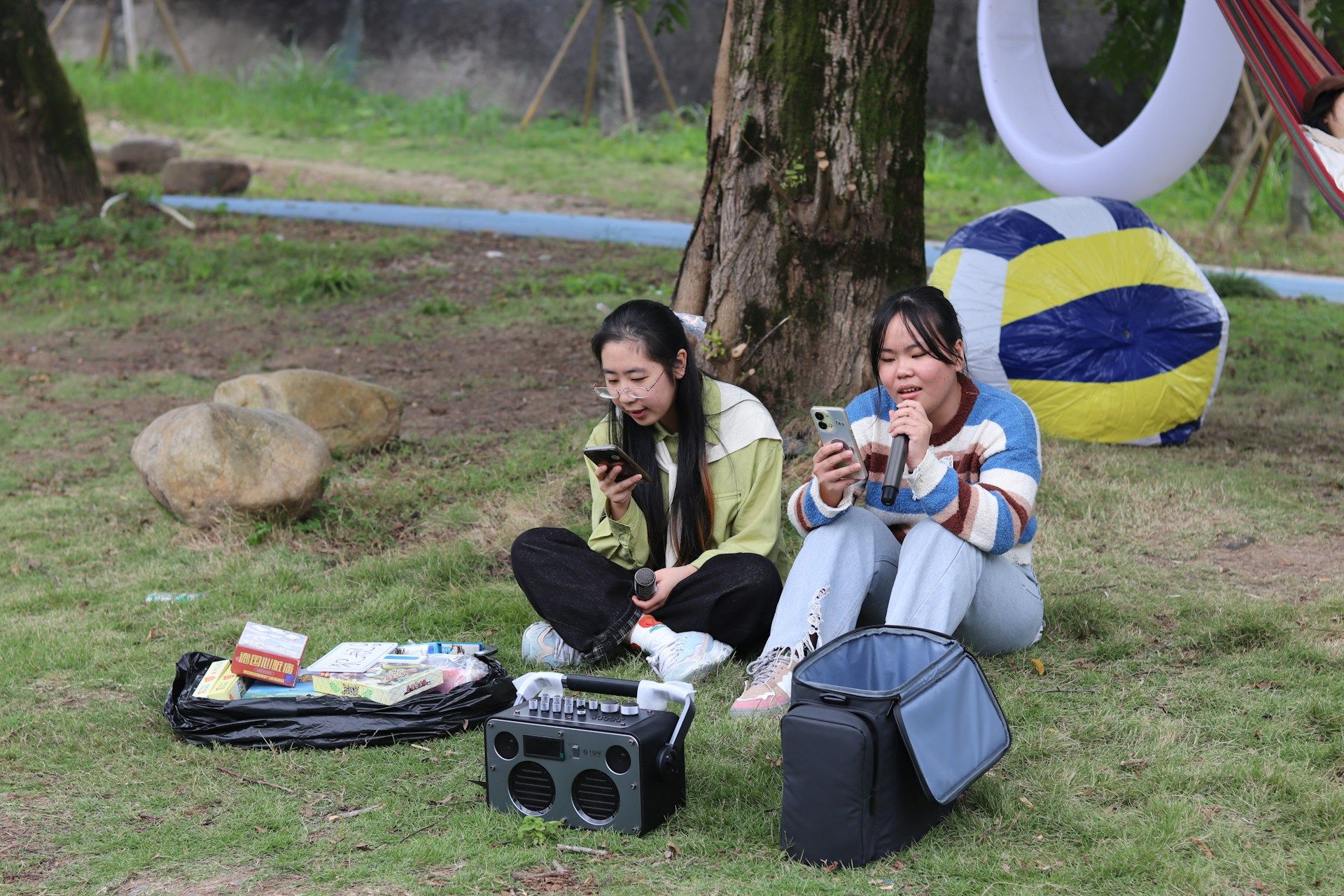
Make your outdoor excursions pleasant. Admittedly, this can be challenging if you live in an urban jungle. However, we all have access to the feeling of the sun on our faces on a 70-degree day. Take five to mindfully soak it up.
Heck, dance in the rain a bit. Let yourself
feel
your connection to the natural world. When you do so deeply, it’s far more exhilarating than any artificial substance. Once you experience that connection, you’re more inspired to nurture it.
Do so. Start small, maybe with a windowsill herb garden if you live in a small, shared apartment. Better yet, get involved in a community garden project—or start one yourself.
3. Build an “Amazon Day” Community
Honestly, if I never had to drive to the store again, it would be too soon. It’s not just the carbon emissions; the physical act of it scares me. While I don’t get carsick, the sensation of going that fast, paired with dodging semi trucks and maniac drivers fueled by road rage, makes it uncomfortable.
Fortunately, it’s now possible to get nearly anything you could ever need delivered right to your door. Of course, this convenience, coupled with the ability to simply run to the store whenever you want, results in a lot more cars on the road, hence, more emissions.
You can reduce that figure somewhat by teaming up with your neighbors, your colleagues, anyone with whom you communicate regularly. Amazon lets you select a preferred delivery date. Coordinate yours with the gang so that the delivery van only has to make one stop per week instead of five or six. Doing so aligns with the principle of
Aparigraha, or mindful consumption.
4. Schedule One Proactive Climate Action Per Week
True confession time. Like many autistic people with special interests, I go all in, a quality that motivated past political activity that may have resulted in more harm than good.
I remain secretly convinced that most people will eventually reach similar conclusions to the ones I have about the changes that need to occur in our society, but whether that idea is true or delusion, folks where I live are clearly not ready to make those adjustments. Trust me, I heard that particular “slow down there, Nitro,” message from the Universe loud and clear, even as I remain as committed to my key values (and the third party that most resonates with them) as ever.
Plus, going all in is
hard, y’all. To quote the estimable Sweet Brown, ain’t nobody got time for that.
However, most of us
do have sufficient time to take at least one positive, proactive climate action per week.
Maybe it’s writing a letter to the editor of your local paper. Perhaps it’s sending one email to your representative or signing one petition. It doesn’t have to be as grandiose as standing in front of a conservative county board to advocate for solar energy. As anyone who has succeeded in business will tell you, consistency counts for a lot more than the occasional one-off in creating long-term success.
There’s no longer-term “success” that I want more than the ongoing viability of our planet, and I think I speak for many when I write those words. Let’s start applying those “productivity principles” we’ve all been lectured on since our first day at school toward cleaning up Planet Earth. I bet things get better if we do.
5. Have an At-Home Yoga Retreat
There are a lot of concerns about data centers. I share them, but not for the reasons most people think. It’s not the current energy draw that concerns me; it’s how we power them in the future. When I don my “climate change optimism” hat, I envision future data centers run by solar panels used to create microclimates, beneath which grow crops that benefit from the increased localized humidity and shade they provide.
My utopian lens sees data centers as a macrocosm of what we’re trying to build here at A Quiet Place, creating a smart use of land where various aspects of the “economy” (aka, the daily activities that support human life) support each other in a more circular manner. Workers could spend two hours in the fields, two hours at their desks, then nurture their families. Everyone could be healthier, have greater access to the outdoors, get more exercise, and enjoy a better work-life balance if we’re willing to slow down and design things mindfully, for people and the planet, not just profit.
But I digress into future fantasies. As of right now, the problem with data centers is that they take enormous power and water resources away from other uses, like agriculture. Furthermore, dry conditions mean greater wildfire risks. Forests are the planet’s lungs, and we need wild spaces to support living creatures beyond mere humans. Not to mention the human psychological need for the wild, for a place to escape the madding crowd and simply be, one living creature amid an untamed environment.
What on earth does all this have to do with having an at-home yoga retreat? Here’s the thing: as much as we must remain collectively cognizant of the dangers of data centers, they do environmental good as well. Consider this math: According to Google’s Gemini, the emissions created by a one-hour commute to work in a standard, internal combustion-engine vehicle are between 100
and 500 times greater [3] than those created by one hour of video streaming.
Please don’t get me wrong: If I had had the means when I was younger, I would have hopped aboard the first plane to Goa to attend a coveted yoga retreat live and in person. Present-day me, stuck as I have been in the heat for two months, shudders at all the emissions that trip would create. Knowing I can stream
Purple Valley Ashtanga lessons and led classes from home, any time I want, has been an incredible blessing. Heck, I have a
whole world of yoga that I can access without the hassle of going through security (or the embarrassment of having outsiders ask, “Why is that healthy-looking woman in a wheelchair?”).
I know you have to consider the source, but I’ll let you in on a little secret I have gleaned as an AI gig worker. AI is kind of like Wikipedia right now, with millions of people engaged in its creation and others refining it through fact-checking. That makes it just about the greatest central knowledge base ever designed. It’s beyond the scope of anything the famous builders of the Library of Alexandria even imagined. It has the potential to make the collective knowledge of the human race accessible to anyone. As long as it remains
a collective effort, it has my trust.
Access to modern technology is part of what inspired Ed and me
to create our channel, too. Admittedly, it was to provide a free resource to as many people as possible, but the recent hoopla over data centers gave me guilty feelings, as I do care deeply about the planet. Turns out teaching yoga the newfangled way is more sustainable than opening my own studio (although a mini-retreat is part of our eventual Quiet Place design). I must tip my hat to the creators of the tech I once dismissed.
If you want to be a true purist, you don’t have to stream at all. Practicing yoga requires nothing more than your body. You don’t even need a mat if you combine it with earthing, practicing your flows directly on the ground to get back in sync with the
planet’s natural electrical field [4]. You can’t get much more sustainable than you, yourself, and the earth!
Small Individual Steps, Big Cumulative Impact
Climate change is scary. That fear can leave you feeling so unbalanced that you find it hard to do anything at all.
However, giving in to despair never improved a thing. Even if you feel like the problem is way too big for your actions to make much of a difference, the truth is, a lot of little people acting in unison creates enormous transformation. Let go of your need to control the entire outcome, and instead focus on proactive steps you can take. May these ideas inspire you to become a part of the solution by applying the sense of calm you cultivate on the mat toward meaningful steps to a greener tomorrow.
References:
[1]
Goldstein, Benjamin P., et. al. “The carbon hoofprint of cities is shaped by geography and production in the livestock food chain.” Nature. Published October 20, 2025. Accessed August 31, 2026, from: https://www.nature.com/articles/s41558-025-02450-7
[2]
Macdonald-Evoy, James. “Utility concerns kill bill to allow plug-in solar panels in balconies and backyards.” The Arizona Mirror. Published February 18, 2026. Accessed August 31, 2026, from: https://azmirror.com/briefs/utility-concerns-kill-bill-to-allow-plug-in-solar-panels-on-balconies-and-in-backyards/
[3]
Google Gemini. Version 3.7 Flash. Accessed August 31, 2026, from: https://gemini.google.com/app/0fea296a3d7ed0d5
[4]
“Benefits of earthing: How grounding improves health, sleep, and inflammation.” Culver Pediatrics Center. Published October 28, 2025. Accessed August 31, 2026, from: https://culverpediatrics.com/post/benefits-of-earthing