Double Your Benefits, Double Your Fun: Combining Earthing With Yoga

Jennifer Stanley • October 9, 2025

What if you could get a two, even three-for-one punch of goodness with your flow? You can.

Yoga offers a laundry list of health benefits. So does earthing. Why not combine the two practices for a one-two punch of goodness? Here’s how you can do so and tips for connecting more deeply with Mother Earth when taking your flows outdoors. 


What Is “Earthing?”

Earthing, or grounding, refers to the act of standing barefoot on the naked earth, perhaps on a grassy patch, or, here in the desert, more often soil or rock [1]. Doing so connects you energetically with the ground beneath your feet, facilitating the flow of electrons between you and Mother Earth. 


According to Dr. James Oschman, biophysicist, this direct contact with the earth’s electrons
neutralizes free radicals, acting like natural antioxidants [2]. 


What Are the Health Benefits of Earthing? 

You might already know that antioxidants are good for you because of their ability to nix free radicals. According to earthing aficionados, the benefits include better sleep, lowered pain levels, and faster recovery. However, the benefits of earthing aren’t confined to subjective patient reports. One 2015 study found that earthing reduced inflammatory biomarkers in just one hour. 


Another, more recent randomized clinical trial found that earthing mats
reduced stress levels, insomnia, and daytime sleepiness [3]. Best of all, earthing is free — all you need is a natural patch of soil and your bare feet. How often do you find free healthcare like that in America these days? 


Combining Earthing With Outdoor Yoga to Multiply the Perks

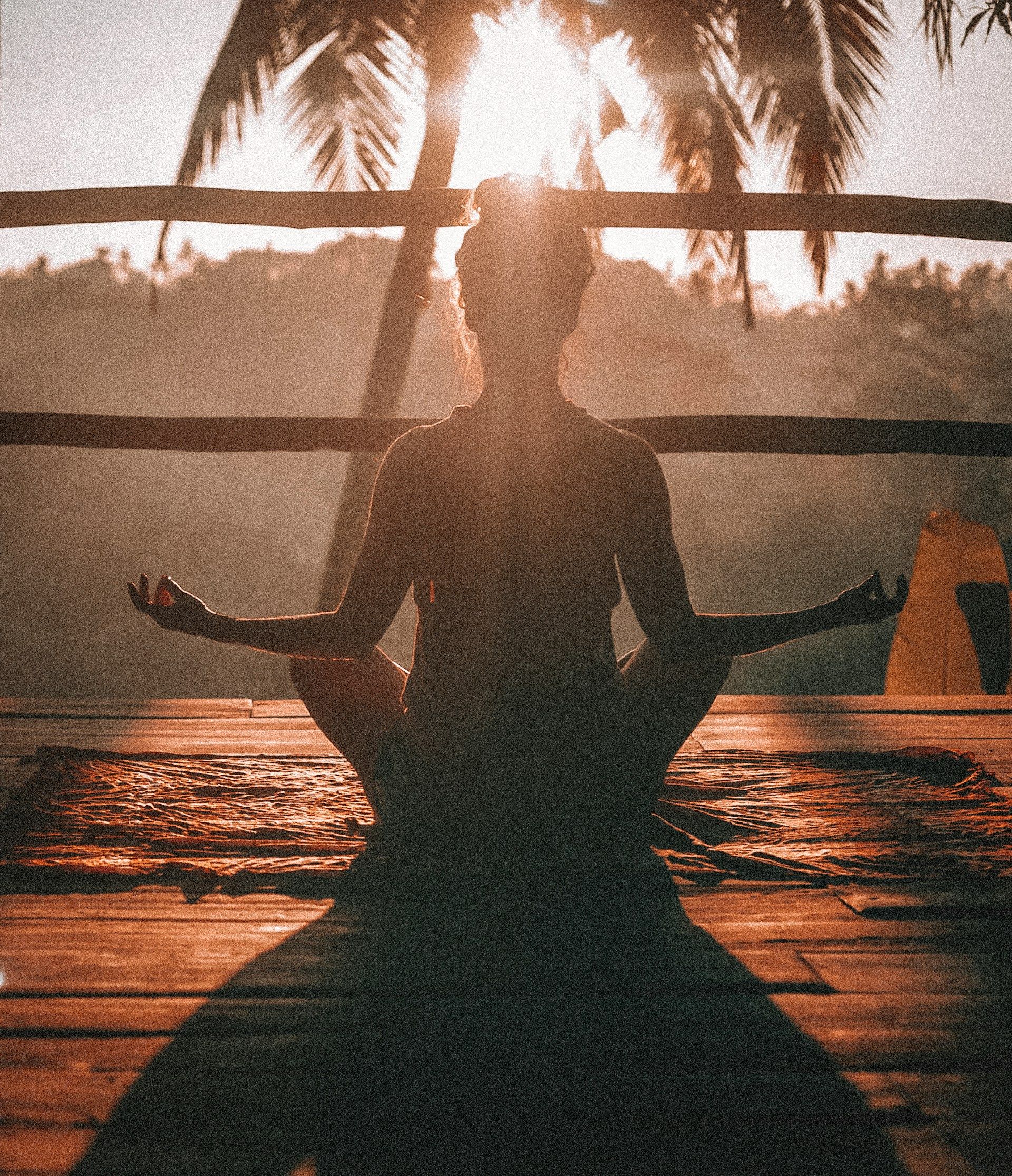
Yoga, of course, is also fabulous for reducing stress and improving sleep quality, benefits that many of us today can definitely use [4]. Doubling the perks by combining your flows with earthing is as easy as taking your practice outside. 


Doing so may provide a trifecta of goodness. Simply soaking in the sun and breathing the fresh air
can reduce stress and provide other mental health benefits, like improving executive attention [5,6]. 


Tips for Making the Most of Your Combo

I began earthing with yoga out of necessity. I enjoyed practicing my flows on the rocks following a hike, and I didn’t like carrying a mat with me. However, a little prep and a few creature comforts can make combining yoga with earthing even more satisfying. 


1. Scope the Scene 

Put on your real estate agent hat if possible — location, location, location. Something with a spectacular view is nice (and not hard to find in Sedona), but there are other characteristics more crucial in selecting the right spot. 


First of all, is the surface comfy to your bare feet? Use the same caution you would when dipping your toe into the pool. Goatheads can hide in seemingly soft grass, and practicing on them isn’t fun. I speak from personal experience. 


Scope the entire sensory scene. Some people prefer the camaraderie and safety of practicing in a noisy area of a public park, while others prefer quieter locations. Funky smells can be hard to avoid outdoors if you live in the country near a dairy, but are there avoidable hazards, like a smoky barbecue on one side of the park but open space on the other? 


2. Wear Kick-Offable Shoes 

Dust sticks to bare feet and will stain your socks. I speak from experience. If you are of the inclination to keep your footwear pristine, wear shoes that are easy to kick on and off. 


If you walk or jog to your chosen spot, consider bringing a backup pair of socks. Putting on your old ones after they get all sweaty is
ick


3. Dress for the Weather (and Remember, Safety First)

Earthing in January can be a little chilly here in the desert southwest. I don’t even want to imagine some colder areas of the planet. 


Dress for the weather, and keep your safety paramount. Remember, exposing your body to below-freezing temperatures
can cause frostbite, and your extremities are often the first affected [7]. 


4. Keep a Towel Handy 

It’s understandable to want to leave your bulky mat at home. However, you can drape a towel around your shoulders. Pro-tip: Sticking it in the freezer first is a cool treat on a hot summer’s day. 


You want your bare feet against the earth when combining earthing with yoga. However, it’s helpful to have a clean(ish) cloth to wipe your face, your feet, or just to change your shoes on. 


Combining Earthing With Yoga 

Yoga offers multiple health benefits, including reducing stress and enhancing sleep. So does earthing. Combining the two practices could potentially multiply the benefits. Test the theory yourself by combining earthing with yoga the next time you practice, and tell us about your experience in the comments. With love and hope for healing, always. ~ J. 


References:


1. “What is earthing?”
Earthing.com. N.d. Accessed October 9, 2025, from: https://www.earthing.com/pages/what-is-earthing

2. “Mayo Clinic earthing: The science 101.” PB Pressbooks. N.d. Accessed October 9, 2025, from: https://ubalt.pressbooks.pub/clinic/chapter/mayo-clinic-earthing-the-science-101/

3. Kim, So Hee, et. al. “A randomized, double-blind, placebo-controlled study on the improvement of sleep quality with Earthing mat.” Science Direct. January, 2025. Accessed October 9, 2025, from: https://www.sciencedirect.com/science/article/pii/S2212958825000059

4. Bu, Zhi-jun, et. al. “Effects of various exercise interventions in insomnia patients: a systematic review and network meta-analysis. BMJ Journals. April, 2025. Accessed October 9, 2025, from: https://ebm.bmj.com/content/early/2025/07/09/bmjebm-2024-113512

5. “Nature and mental health: Why time outside helps you feel better.” Mass General Brigham McLean. N.d. Accessed October 9, 2025, from: https://www.mcleanhospital.org/essential/nature

6. McDonald, Amy S, and Strayer, David L. “The influence of a walk in nature on human resting brain activity: a randomized controlled trial.” Nature. 2024. Accessed October 9, 2025, from: https://www.nature.com/articles/s41598-024-78508-x

7. “Frostbite.” NHS. N.d. Accessed October 9, 2025, from: https://www.nhs.uk/conditions/frostbite/ 

A purple cabbage is sitting on top of a wooden cutting board surrounded by other vegetables.
By Jennifer Stefanow July 13, 2026
Can’t Sleep? Try This Evening Ritual (Updated for 2026) Written by Jennifer Stanley Few things in life are psychologically harder to cope with than insomnia. You know sleeplessness is going to affect you the next day. Worse is the anxiety that builds when it strikes night after night. You stumble through waking life like a zombie but curse the sight of your bedroom ceiling through your open eyelids at night. Although scientists don’t fully understand why living creatures need sleep, they know it harms your health when you don’t get enough. You become more accident prone, and your risk of various diseases increases. Plus, you get moody and snap at loved ones, straining your relationships As someone who struggles with insomnia, I empathize. While nothing health-related is guaranteed, certain habits and practices can nevertheless make it easier to get your Zzz’s. Try parts or all of this evening ritual the next time you can’t sleep or, worse, suffer a stretch of insomnia. What’s Causing Your Insomnia? Get Mindful Finding the root cause of your insomnia might be a no-brainer. An ailing loved one, a struggling relationship, work woes, financial troubles — all can impact sleep quantity and quality. If difficult life circumstances underpin your insomnia, radically accepting that you might find it hard to sleep for a while can sometimes, ironically, help. If not, at least it stops that nagging anxiety-choir of “what’s wrong with me, I’m exhausted, I know I need rest.” Acknowledging, “Hey, anyone would be struggling right now,” can be just the shot of loving-kindness your weary soul needs, and while it’s no substitute for eight solid hours, it’s better than fighting a losing battle with dreamland. Medicine, Food, and Hormones, Oh, My! At other times however, your insomnia might arise from physical or environmental factors you may not have considered. For example, medications as diverse as beta blockers [1], antidepressants and even cold tablets can affect sleep. Undiagnosed food allergies can likewise affect slumber by raising histamine levels [2] that promote wakefulness. If you suspect a sensitivity but can’t afford testing, the elimination diet method can sometimes pinpoint a culprit. Be patient and methodical, as it can take a while if you’re sensitive to something outside of the Big 8. Hormones are also a factor — shout out to my other 50-somethings experiencing night sweats. High cortisol levels are a common offender [3], hence, why it’s harder to sleep during life’s most stressful moments. However, keep in mind that changes in other hormonal levels, such as estrogen [4], can also cause cortisol fluctuations. If possible, consider a consultation with your doctor. If primary care offers few answers, a qualified naturopath or other holistic health practitioner may take more time to go over all over your symptoms and your life history to establish a course of care. Examine Your Daily Routine How you pace your day influences how well you sleep at night. In general, you want to tackle your toughest mental and physical activities soon after waking, taking on less stressful activities as you get closer to bedtime. Recently, some people have reported terrific success using the 10-3-2-1-0 sleep rule. What Is the 10-3-2-1-0 Sleep Rule? Dr. Jess Andrade, sports medicine physician, explains the 10-3-2-1-0 sleep rule [5] as a guide of activities to cease at specific intervals before bedtime to encourage more restful sleep. It works like this: Stop drinking caffeine 10 hours or more before bedtime. Caffeine blocks your adenosine receptors [6], a body chemical that builds up over the course of the day, making you sleepy. Finish your last big meal at least three hours before bed. Digestion can stimulate you, keeping you awake, and lying down too quickly after eating can trigger gastric reflux. Stop all work activities at least two hours before bed and begin your evening ritual. Turn off all screens at least one hour before bed, as it stimulates your mind and the blue light can keep you awake [7] by affecting melatonin. How many times do you hit snooze? Zero! That’s a big goose egg. Studies suggest hitting snooze doesn’t add to quality sleep and may extend morning grogginess [8], a condition called sleep inertia. The Role of Exercise What about exercise? Doesn’t a good daily workout help you get more rest? Yes, and exercise should absolutely be a part of your routine — with one caveat. Three hours before bed, cease all heavy physical activity. You can still include a gentle, soothing yoga routine, such as the one below, to ease you into dreamland. However, save anything that exerts your muscle power or gets your heart pumping for earlier in the day, as it keeps your core temperature elevated [9] and revs up your metabolism, which can make sleep elusive.
By Jennifer Stanley June 30, 2026
It’s America’s 250th birthday. You have plenty of options to celebrate. Here are ideas for the folks who enjoy something quieter and more mindful than fireworks.
Yoga
By Jennifer Stanley June 16, 2026
Get on down to improve your ability to get back up again.
kittens
By Jennifer Stanley June 2, 2026
Life and love go on if you mindfully create the space and time for them. Please help us welcome our two new furry family members to OIS yoga and A Quiet Place.
By Jennifer Stanley June 2, 2026
Hey yogis! There's a very good reason the human nervous system intrigues me. Here's how yoga helped me figure out the last and final piece of my health puzzle.
By Jennifer Stanley May 27, 2026
Will your usual practice make you feel better when you feel bad, or is it best to take a rest?
10-minute stretch routine for sore shoulders
By Jennifer Stanley May 19, 2026
Aching shoulders can result from hunching over the computer or playing your favorite sport. Either way, this 10-minute, yoga-based stretch routine may help.
11-pose routine for hips you can do in bed
By Jennifer Stanley May 12, 2026
Your hips are perhaps your body's most complex joint. Tightness here can spell trouble, but you can increase your flexibility and reduce your injury risk--in bed!
Yoga for lower back pain: lumbar spine pictured
By Jennifer Stefanow May 6, 2026
Many doctors advise movement over bedrest for lower back pain. This routine may help you ease your aches. Plus, it's safe and gentle enough to do every day.
E
By Jennifer Stanley April 22, 2026
Everyone experiences negative emotions. You can choose to stuff them down or act out, making a bad situation worse. You can also process them on your yoga mat.