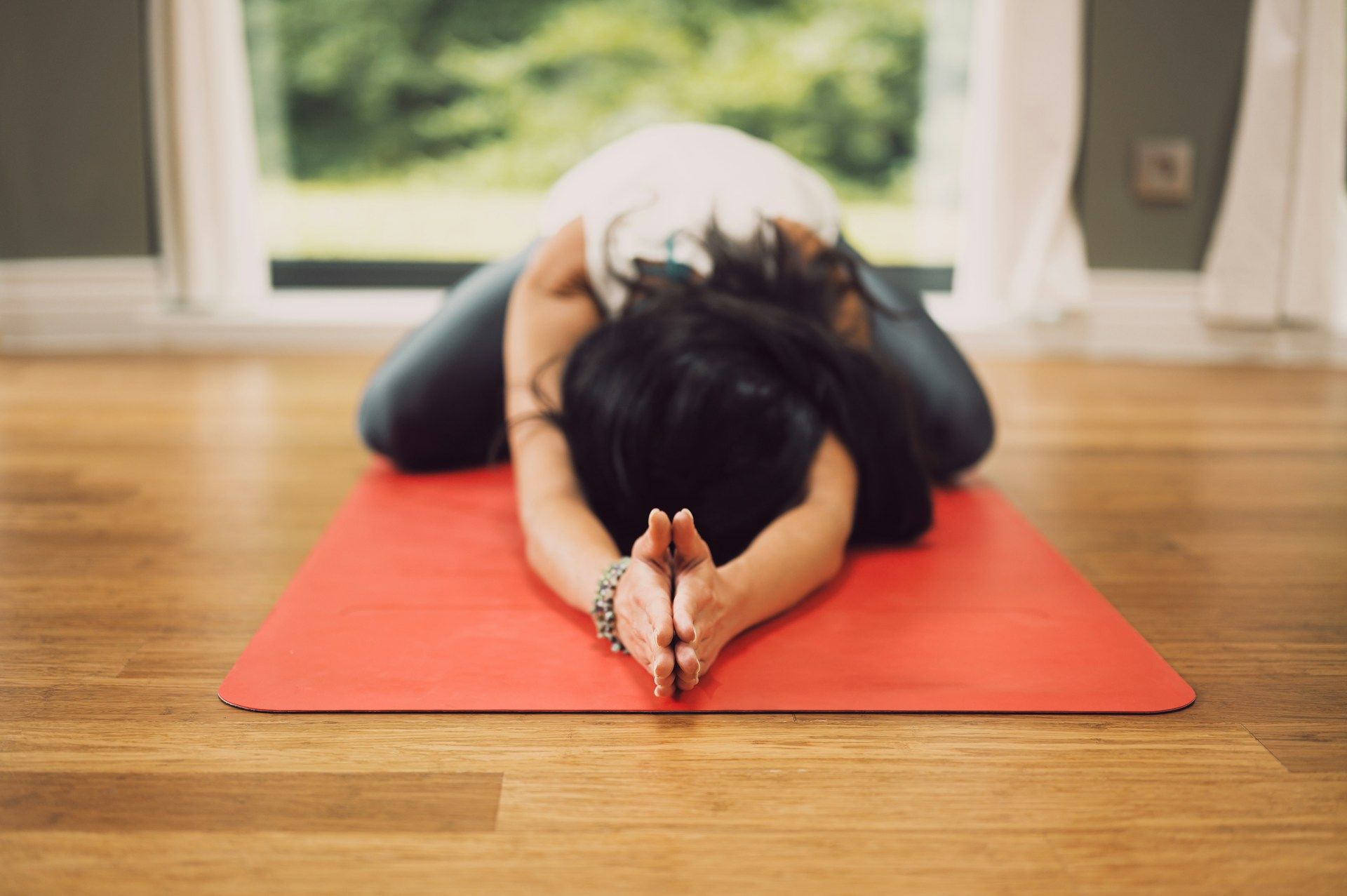
Overcoming Common Yoga Fears
How to Face Your Fears and Try Yoga for the First Time
Overcoming Common Yoga Fears
Are you among those who are “yoga curious” but afraid to set foot into a studio? Being hesitant because you don’t know what to expect is a perfectly natural reaction. However, it’s no reason to stay away from a practice you may grow to love as much as I do.
Here are the five most frequent reasons I hear when people describe their reluctance, plus the 411 you need to put these “spooky” yoga fears to rest.
1. I’m Not Flexible
You’ll often hear me say on our Only in Sedona Yoga YouTube channel, “Don’t worry if your poses don’t look exactly the same as mine. Everyone’s bones, muscles, and connective tissues are slightly different.” There’s a good reason I repeat these words so often.
I’m admittedly a bit hypermobile by virtue of the genetic lottery. But guess what? Compared to some yogis, I’m not very flexible, either! But here I am, teaching yoga, anyway.
Here’s a nifty fact I’ve learned on the mat that can teach you a lot about life outside of the yoga studio as well: everything is a spectrum. Including flexibility. In fact, you might be flexible in some areas and less so in others.
No one walks around sporting a crown of World’s Greatest Yogi—because there’s no one right way to practice yoga.
In fact, that’s what I love about yoga the most—the fact that there’s no one “one right way” to practice it. There’s no way to “fail” at yoga, and if your guide is measuring you against some arbitrary standard instead of encouraging fitness that starts from where you are while providing a conducive atmosphere for relaxation and introspection, it’s time to find a new class.
Obviously, you want to follow sound physiological principles, which is why yoga guides exist. However, the person at the front of the class can never do the interior work of yoga. Physical asanas are only one of its eight limbs.
Your goals and reasons for practicing yoga are utterly your own. The mat simply creates
space where you can work toward them. It doesn’t matter if your objective is improving tight hamstrings to ease lower back pain, restoring a badly overstimulated central nervous system, or simply coming home to yourself and engaging in movement that feels good.
2. I Don’t Know What I’m Doing
You didn’t know how to read once upon a time, either, yet here you are. Look at you go!
Everyone is clumsy when they’re new at something. It’s also perfectly natural to feel hesitant when entering a new environment for the first time.
However, most yoga people are introspective, which makes them more patient and accepting. The people you meet in a public yoga class are often delighted to help you, as long as you respect their experience as well. Showing up on time (or better yet, a bit early), staying through the entire class, and avoiding obnoxious perfumes or noises that disrupt others pretty much covers the basics to avoid social faux pas.
3. I Might Hurt Myself
Concerns over getting hurt are valid, especially if you live somewhere where the cost of healthcare can financially devastate you and your family. Being forced to decide between a roof over your head and needed care is a dilemma no one should face.
Here’s where choosing the right class and guide matters. Your guide should be educated in basic exercise physiology—it’s worthwhile checking if they are credentialed through a reputable fitness organization.
However, it’s also important to avoid instructors with a “one size fits all” mindset, which may include those without yoga-specific training. Often, instructors at chain gyms hold a group fitness instructor credential but may know little about yogic philosophy. As such, they may be more likely to adopt the “this is the one right way to do a pose” attitude that can sometimes encourage pushing past the point of injury.
Although
sprains and strains [1] are the most common yoga injuries, yoga should always make you feel better, not worse.
Listen to your body, and if a pose doesn’t feel right, skip it. If a “vibe check” makes you feel like doing so would not be acceptable in a particular class’s environment, look for a more welcoming atmosphere.
4. I Don’t Have Anything to Wear
Some yogis prefer to wear all white, especially those who practice Kundalini. Some prefer tight-fitting clothes that don’t tangle during rapid-fire vinyasas. Others prefer looser, less form-fitting garments. Some people even practice naked, though not in public, for obvious reasons.
What you wear to a yoga class has more to do with the rules and customs of the individual studio and, of course, those of your society and culture. However, any attire that enables you to move freely and makes you feel comfortable is A-OK in the vast majority of cases. When in doubt, check with the guide before class.
Of course, it’s also polite to avoid wearing clothing that might offend others, including anything controversial. Remember, part of yoga is respecting others as you respect yourself, so when in doubt over whether something is acceptable, err on the side of loving-kindness.
5. I’ll Waste My Money
This is another fear based in cold, hard reality. Most of us have limited entertainment budgets and free time—we don’t want to waste either on something that isn’t the right fit for us.
Most studios offer a limited number of free sessions so you can see if the atmosphere is a good fit for you before parting with your cash. Others may offer day or drop-in rates, and while they may cost more per session than a full membership, you can still try before committing to a bigger buy.
Quick Tips for Making Your First Yoga Class Less Scary
- Go with a friend. If you feel awkward, having someone else to share your “first-time jitters” with can help.
- Go early. You can speak with the instructor, get an idea of their style, and learn what to expect.
- Ask about hands-on/hands-off correction. Some guides are rather hands-on with their alignment corrections, which can be triggering to some people. If you prefer a hands-off approach, make it known. Some larger studios use color-coded cards placed near your mat to indicate your preference.
- Go virtual. I personally love practicing yoga at home; a social butterfly, I will never be. Only in Sedona Yoga started as our contribution to providing a free, at-home, healing resource, and YouTube abounds with other instructors if our style doesn’t quite suit your needs.
We’re here for you every Wednesday with a new short flow, and every Saturday to come home to yourself with a longer restorative flow, followed by a body scan meditation. We also offer one-on-one virtual instruction, so
get in touch with us through our website. We’re happy to help you overcome your yoga fears and embark on your journey to improved wellness.
References:
[1] Swain, Thomas A. and McGwin, Gerald. “Yoga-Related Injuries in the United States from 2001 to 2014.” National Institutes for Health. November, 2016. Retrieved October 30, 2026, from:
https://pmc.ncbi.nlm.nih.gov/articles/PMC5117171/