Should You Practice Yoga When You're Sick?
Is it safe to practice yoga when you're sick? Yes, but with the following caveats.
If you’re a regular fan of Only in Sedona’s Sober Saturday restorative yoga and meditation livestream, you’ll know that we’ve had some unavoidable changes to our regular programming, due to my (Jennifer’s) recent hospitalization. As I draw inspiration for Only in Sedona Yoga from my life, this experience made me ask something many of you may wonder about as well: Should you practice yoga when you’re sick?
While the simple answer is yes, reality is a bit more complicated. Here’s what you should know about practicing yoga when you’re sick and how doing so might facilitate your recovery.
What Are the Rules for Practicing Yoga When You’re Sick?
Let’s face it: The Ashtanga primary series is probably the last thing you want to do if, like the old “Hot Blooded” song, you’ve got a fever of 103. However, even mild illness produces fatigue and taxes your body’s energy resources. You’ll want to take it easy, but how much so depends on your specific symptoms.
The old rule for indulging in physical activity when sick states that symptoms occurring “above the neck,” such as sniffles and sneezing, shouldn’t prohibit you from working out [1]. When you have symptoms “below the neck,” such as vomiting, fever, and body aches, you should not exercise.
However, this rule isn’t supported by recent studies. Furthermore, as someone with a rare migraine subtype, I take umbrage to it, as there is no way on God’s green earth that I could perform certain yoga flows in the midst of a bad attack, even when my symptoms stay primarily “above the neck.” Dizziness and vertigo preclude balance poses such as Tree, and the motion alone could move those symptoms down to my belly in a most unpleasant fashion.
During my recent hospital visit, I was hooked up to so many wires that independent movement was pretty much impossible. Obviously, during extreme situations like inpatient hospitalization, you should follow your doctor’s recommendations and avoid any activities that could have adverse effects, such as dislodging your IV.
However, if you’re merely practicing yoga at home when you’re sick, VeryWell Health suggests letting your body be your ultimate guide. They recommend against exercise when the following conditions apply:
- Fever
- Heavy cough
- Productive cough
Otherwise, they suggest letting your body’s energy levels be your guide. A walk or a mellow yoga class is probably okay in many cases. However, you should rest if you feel truly fatigued or run down.
What Kind of Yoga Should You Practice When You’re Sick?
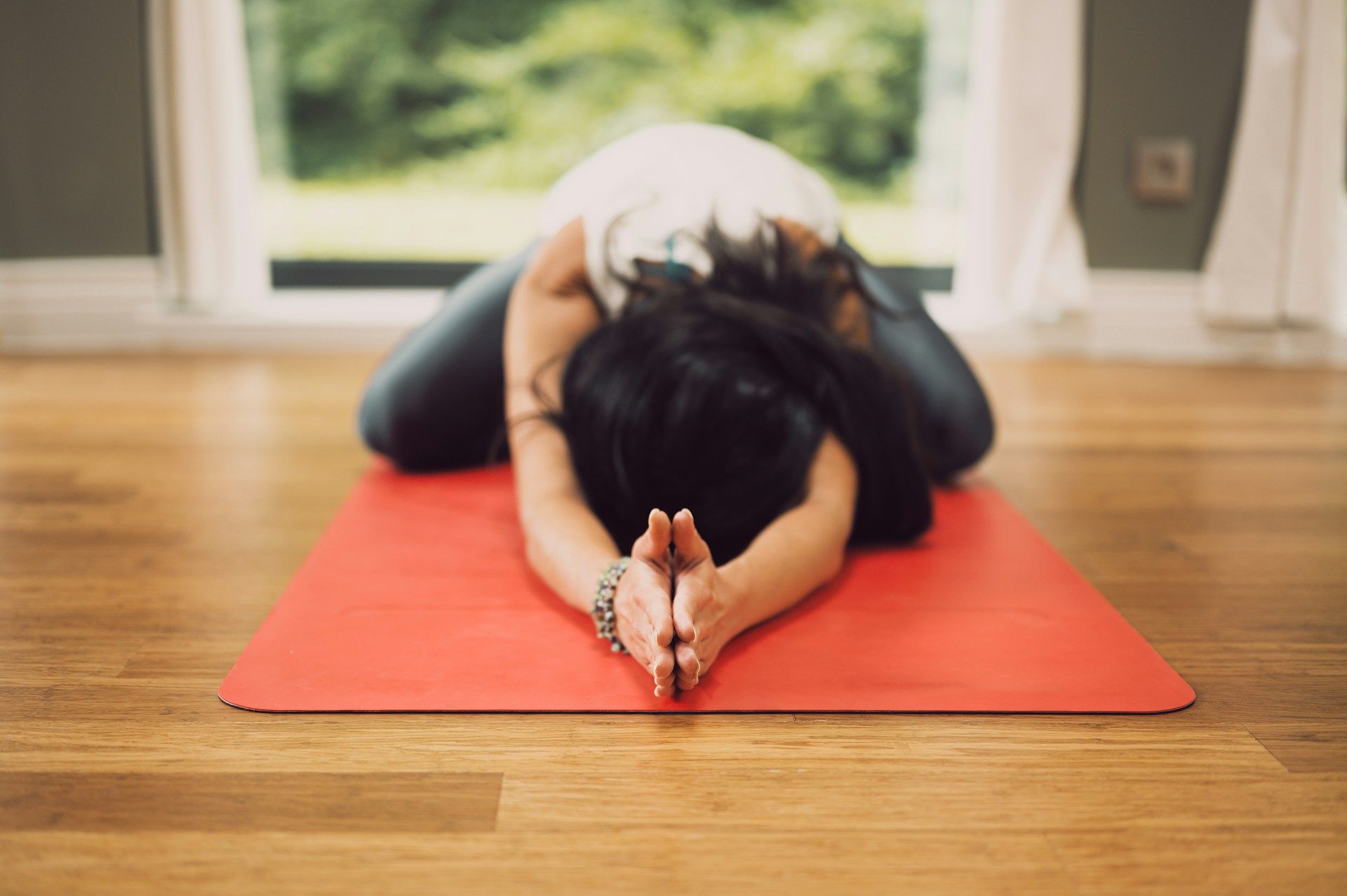
You can practice some forms of yoga right in bed, making them ideal for keeping up your practice when you’re sick. Yin and restorative yoga immediately come to mind, as both styles feature slow, passive stretches that don’t elevate your heart rate or tax congested lungs.
There’s always a silver lining: Thanks to my recent inpatient experience, you can now choose from two bed-inspired flows when you aren’t feeling your best for free on the Only in Sedona Yoga channel. Devi Daly yoga also features numerous flows that I’ve done in bed in the past, and some of Travis Eliot’s Yin flows are equally appropriate.
There’s another form of yoga that’s perfect for when you’re sick: Yoga Nidra. This completely passive yoga practice is akin to a guided meditation but may be particularly soothing for upset nervous systems. This ancient practice alters your brain waves, encouraging the kind of deep relaxation that may facilitate your healing [2]. It’s more or less what I did for three days straight during my recent hospital visit.
Practicing yoga nidra requires nothing more of you besides lying back, closing your eyes, and listening to your guide. Getting more rest is nearly always a good idea when you’re sick, making this highly relaxing yoga form an excellent complement to traditional remedies.
Can Practicing Yoga When You’re Sick Help You Get Better Faster?
When you’re sick, your only priority is getting well. Could yoga help you feel better faster? Possibly, through several mechanisms.
One way practicing yoga when you’re sick may help you feel better is by calming and toning your nervous system. Infections such as COVID-19 can cause dysfunction with the sympathetic and parasympathetic halves of your autonomic nervous system [3]. You might feel panicky for no reason or stuck in “zombie mode” well after the most acute stage of infection abates.
Gentle yoga practices also facilitate sleep, which can be frustratingly hard to find when you’re sick. Studies suggest that yoga nidra can promote deep and higher quality sleep, giving your body the “break” it needs to devote all its energy to getting well [4].
What Are the Risks of Practicing Yoga When You’re Sick?
Practicing yoga when you’re sick carries risks to both yourself and others. Therefore, you should choose your format and location carefully if you decide to indulge.
One obvious risk is spreading infection to others, including those who might have compromised immune systems that make them more susceptible to severe complications. For example, the flu can live up to two days on hard surfaces, and the coronavirus may last a few days [5]. You get pretty up close and personal with borrowed studio mats, not to mention other surfaces — please practice at home when sick with an infectious disease.
Furthermore, your compromised immune system can make you susceptible to more serious bugs when you’re already sick. Infections such as bronchitis, strep throat, and pneumonia often begin this way [6]. While you do have some immunity to the same pathogen for a limited time after you become sick with it, this immunity does not last, and other germs can take advantage of your weakened immune system if you push yourself too hard and fail to isolate yourself [7]. Once again, your safest bet for practicing yoga when sick is at home in your living room (or your bed).
How to Practice Yoga When You’re Sick: 5 Tips
The following five tips can help you practice yoga safely when you’re sick.
1. Isolate Yourself
While this rule only applies when you’re sick with an infectious disease, please do remain mindful of how quickly germs can spread and how long they can linger on certain surfaces, like yoga mats. You have no way of knowing if the next person to use shared studio equipment is immunocompromised, so be kind and stay home. Even if you wear a mask, it’s nearly impossible to keep from transferring germs when you’re that up close and personal with the general public.
2. Be Extra Mindful of Fatigue
Your body should always dictate the pace while practicing yoga when you’re sick. If you start to feel fatigued or like any pose is too much — even if you’re merely sitting up — take a break. Think of it this way: tuning into your body’s needs won’t delay your return to your usual flow. Conversely, pushing too hard can result in further injury that lands you on the disabled list for a much longer time.
3. Choose a Gentle (Balance-Free) Style
Take a tip from the vertigo queen (that’s me, your guide, Jenn) and get low when you aren’t feeling your best. Even mild head congestion can throw off your usual sense of balance a bit, so save Dancer Pose for after you recover. Yin and restorative yoga are your best bets if you want physical movement. Restorative yoga was specially designed for those recovering from illnesses and injury, and may help stave off the aches and pains that can accompany physical inactivity.
4. Use Props to Make Your Practice Passive
Both Uttanasana (standing forward fold) and Supta Padangusthasana (supine single-legged hamstring stretch) release the muscles and connective tissues along the back of your legs. However, only the former has the potential to make you feel dizzy if you hold it too long. Conversely, you can use a strap to facilitate a supine hamstring stretch, or stack bolsters or pillows to create a headrest when performing a seated forward fold.
Bolsters can make it easier to perform supine twists without hurting your back. You can also use them for poses such as Supported Fish, which can feel heavenly if you’ve been rounding your spine in the opposite direction as you rest in bed.
5. Indulge in Yoga Nidra
Nearly everything in life is best enjoyed in moderation, but yoga nidra may be one exception to this rule. The one caveat is if you are a trauma survivor. Yoga nidra may potentially be dangerous if you have such a history, as it can trigger a negative trance [8].
As a trauma survivor myself, I have never experienced any negative effects — but you should know the risks. However, if you’ve practiced yoga nidra in the past with no adverse impact, feel free to do so to your heart’s content when you’re sick, stopping only if you experience discomfort or other unwanted symptoms like lingering brain fog. I personally found yoga nidra to be a lifeline during my recent hospital stay, but I’m only one person. Use yourself as your best guide.
Practicing Yoga When You’re Sick
Should you practice yoga when you’re sick? While you should proceed with caution, indulging in this ancient practice may facilitate your healing. If nothing else, it can keep your joints from feeling too stiff when you’re confined to bed rest.
Let your body be your guide and do only what you can. Listen to your doctor’s recommendations, and be proactive about your care. If you’re unsure whether a move is safe, ask.
Being sick need not completely derail your daily mindfulness commitment. When practiced gently and mindfully, the ancient practice of yoga can become a healing partner in helping you feel better soon.
References:
[1] Herndon, Kristina. “Should You Exercise When You’re Sick?” VeryWellHealth. October 22, 2025. Retrieved January 20, 2026, from: https://www.verywellhealth.com/should-you-exercise-when-youre-sick-770457
[2] Zerbe, Leah. “Yoga Nidra: Bliss Out Your Brain With This Ancient Practice.” Dr. Axe. December 19, 2025. Retrieved January 20, 2026, from: https://draxe.com/fitness/yoga-nidra/
[3] Allen, Dr. Mark, PhD. “Yes, COVID Affects the Nervous System (and What to Do About It).” Cognitive FX. July 16, 2024. Retrieved January 20, 2026 from: https://www.cognitivefxusa.com/blog/does-covid-affect-your-nervous-system
[4] Summer, Jay Vera. “Yoga Nidra for Sleep.” Sleep Foundation. February 27, 2024. Retrieved January 20, 2026, from: https://www.sleepfoundation.org/meditation-for-sleep/yoga-nidra
[5] Khan, Kamran R. “Should You Disinfect Your Home After an Illness?” UPMC. June 11, 2025. Retrieved January 20, 2026, from: https://share.upmc.com/2025/05/disinfect-home-after-illness/
[6] Villazon, Luis. “Can People Have Two Colds at the Same Time?” BBC Science Focus. Nd. Retrieved January 20, 2026, from: https://www.sciencefocus.com/the-human-body/can-people-have-two-colds-at-the-same-time
[7] “How Long Does Immunity Last After You’re Sick?” AFC Urgent Care. nd. Retrieved January 20, 2026, from: https://www.afcurgentcare.com/burlington/blog/can-you-get-sick-multiple-times-in-a-row/
[8] Bowler, Natalie LPC-MHSP. “Three Risks of Teaching Yoga to People Coping With Trauma.” How We Can Heal. July 27, 2021. Retrieved January 20, 2026, from: https://howwecanheal.com/three-risks-of-teaching-yoga-to-people-coping-with-trauma/