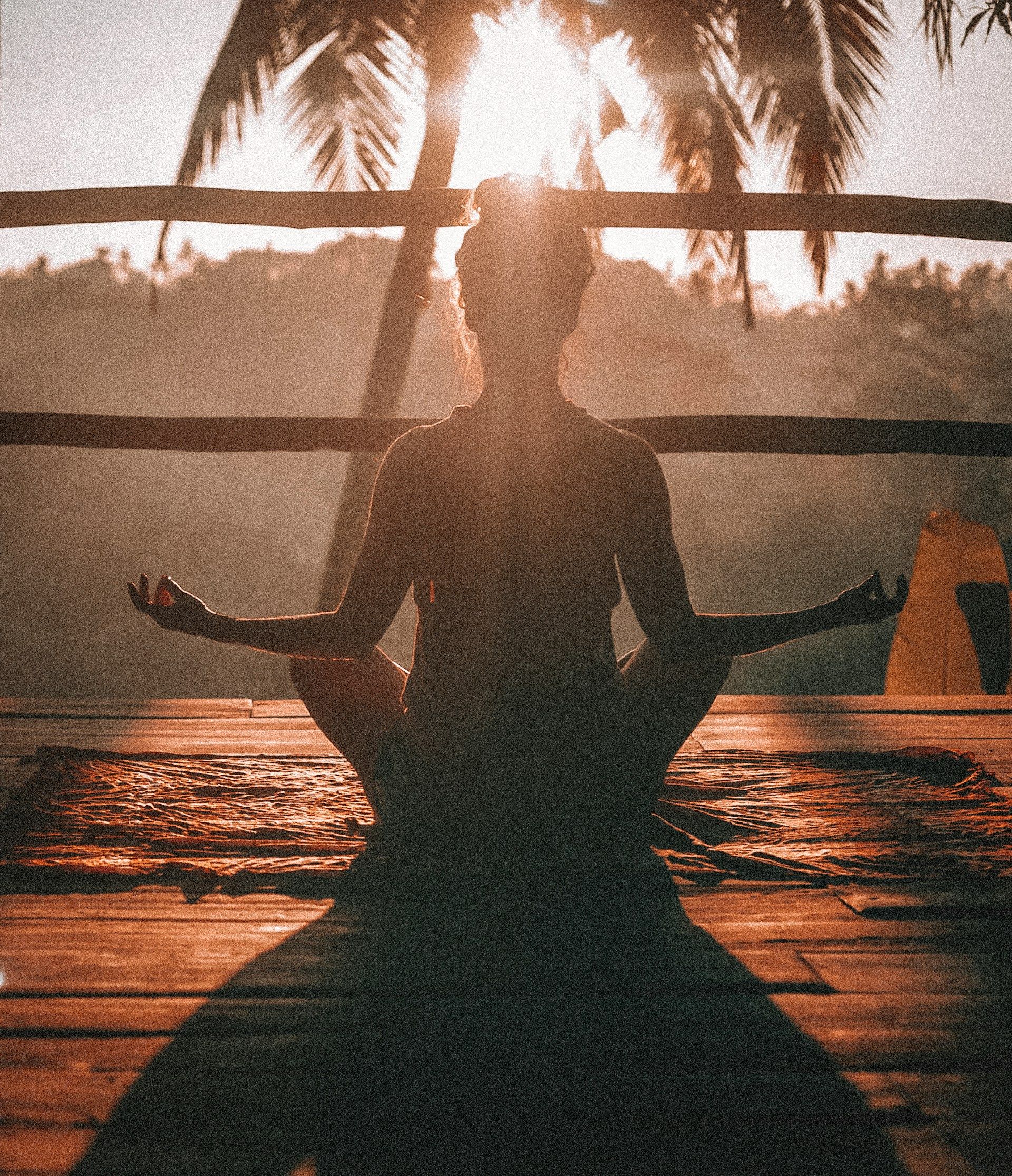
How Long Is the Ideal Yoga Class?
Consistent practice matters more than a singular retreat.
If I had a dime for every time I have heard some variation of, “I’d love to practice yoga, but I just don’t have the time,” you’d see my face next up on Fortune magazine’s “Top Ten Wealthiest People” edition.
While talking to my mat has taught me it isn’t always polite to call out fibs when I hear them, the phrase “I don’t have time to practice yoga” simply isn’t true. While you might not have time to complete the entire Ashtanga primary series on a given day, you can tune into a yoga nidra recording once your head finally hits the pillow after a grinder. Guess what? If you have time to draw a single breath, you have time to practice yoga — and breathing is kind of important.
Still, people talk to their mat for various reasons, usually because they want results, be they emotional, mental, or physical. What does it take to achieve them? How long is the ideal yoga class?
The ultimate answer, dear beautiful, fellow yogi, is as unique as you are.
How Long Must I Practice Yoga to Experience Positive Effects?
What is it you are trying to achieve? Yoga offers multiple positive benefits, many of which you experience immediately. Others take longer to develop.
For example, as much as I love hiking through Sedona’s red rock wilderness, it stiffens my knees, hips, and back up something fierce. I often stop, step off the trail, and perform a few standing forward folds or downward dog asanas to ease the tension in my legs and lower spine. Simply releasing that hard-working posterior chain is instant bliss. That’s an example of an immediate benefit.
However, reprogramming my extremely toxic, learned behavioral patterns is a long-term project. Quite honestly, it wasn’t even a goal at first — which is how I know yoga works for mental health. It did its nifty magic on me even when I wasn’t expecting it. It started with awareness, first gaining insight into the root cause of my emotional distress, then recognizing my role in it. Now, it’s a matter of applying that recognition to my behavior off the yoga mat, catching myself when I’m about to behave maladaptively and either removing myself from the situation before I explode or choosing a different course of action.
I’m a work in progress, but it’s getting easier with time and consistent yoga practice to avoid behaviors that make me feel ashamed. It’s also gotten much easier to recognize people and situations that bring out the worst in me before they become negative influences. Am I perfect at it? Heck no. However, I have experienced the difference, and it has helped me get my life back on track, literally pulling me out of the gutter.
It took several months of consistent daily practice for me to experience the mental health benefits of yoga. Then again, my mind is
filled with muck deeper and nastier than the Augean stables. Large-scale physical or mental transformations will take time, dedication, and persistence, although you still shouldn’t beat yourself up for imperfections. One or two missed sessions won’t derail your progress, so please avoid falling prey to the all-or-nothing thinking trap, giving up before you taste the delicious benefits.
“Okay, that’s all well and good, lady, but give me some rough ideas of how long various perks take here.” Okay. As a reminder,
the Only in Sedona crew does not consist of doctors and scientists but fellow travelers on a healing journey. That said, here’s what science has to say about how long you must practice yoga before seeing the positive effects:
- According to a September 25, 2025, article on Health.com, it takes about two to four weeks for previously inactive people to lose weight and build muscle on a new exercise program. It takes about four months to see significant fat loss. [1]
- A 2025 study of 220 medical students found that a 10-week yoga program significantly improved quality of life, quality of sleep, and emotional regulation. [2]
- According to Jiva Yoga Academy, it takes about three to four weeks of regular yoga practice to increase flexibility. [3]
The bottom line: You’ll experience both immediate and long-term benefits from yoga. Instant benefits include soothing your nervous system and easing aches and pains brought on by muscle cramps and physical activity. Long-term benefits include significant improvements to your overall physical and emotional well-being.
How Many Yoga Classes Should I Do Each Week?
One half of me wants to say, “Oh, at least seven, you need a daily fix,” but that isn’t realistic or practical for most folks. We at Only in Sedona created our weekly Wednesday shorts to help you fit yoga into your daily routine, but some days are just a blur.
The realistic answer is as many sessions as you want or need and can fit — with one caveat. Much depends on the style of yoga you select. For example, you really wouldn’t want to do the vigorous Ashtanga primary series more than once in a single day, even if you schedule a full-day retreat. Yoga reminds us that everything is a balance, and too much of a good thing can
create mental health issues from overexertion. [4]
A large part of any yoga practice, even for those who engage primarily for physical benefit, is mindfulness. Tune into how you feel, and if you notice your routine becoming a chore instead of feeling like medicine, cut back a session or two per week or mix things up with a gentle restorative or Yin class.
Do I Need a Full 90 Minutes? Is 20 Minutes of Yoga Per Day Enough?
While a typical primary series takes roughly 90 minutes to complete, you don’t need an hour and a half daily to practice yoga. 20 minutes per day or even five or ten is fine. Any mindful activity produces benefits, even if they are short-lived and small.
Consistency is key to building habits that stick. If your goal is to take a time out for your physical and mental health daily — something we all should do — then even talking to your mat for a single minute is fine. It reinforces the idea that this activity is an integral part of your daily routine, and what matters is that you stick to your practice, not how long you engage in it.
What Is the Best Time of Day to Practice Yoga?
Speaking of habit building, the best time of day to practice yoga is when it is most convenient and useful to you. Consistency and habit-stacking can help you remember until it becomes automatic.
What is habit-stacking? This practice refers to attaching a new, desired habit to one you’ve already established. For example, if you decide that morning is best for your practice, and you typically take your vitamins in the morning, you might commence your flow right before or after you swallow your daily dose of necessary nutrients.
Is Yoga Alone Enough to Stay in Shape?
As in many of the other questions on this list, the answer is that it depends. Part of the equation centers on what style of yoga you choose, and the other on how often you practice.
According to the World Health Organization, most adults need around
30 to 45 minutes of moderate-to-vigorous activity most days of the week. [5] A good way to tell is by asking yourself how hard it is to control your breathing during your practice — if you struggle a bit, you’re in the right zone. The WHO also recommends strength training at least two days per week. Choosing a style that incorporates power moves, such as long, steady lunges and planks, can fit the bill.
However, if your preferred yoga style is restorative or Yin, you should complement your practice with cardio and strength training.
Can I Use Yoga Just for Physical Exercise?
Yes! Even though I often talk about the mental health benefits of yoga, mostly because they caught me quite by surprise, there’s no reason you need to talk to your mat as a form of therapy. Nor do you need to communicate with the Divine or seek spiritual insights. You can practice yoga for no other reason than easing aches and pains or increasing flexibility to improve your sports performance.
How Long Is the Ideal Yoga Class?
Yoga classes vary in length, and each has its purpose. There’s no one “right” way to practice yoga — anyone who tells you otherwise is likely trying to enroll you in a program or retreat. While yoga guides certainly undergo considerable study and training, there are many paths.
How long the ideal yoga class is largely depends on you and your needs at the time. Some days, you might crave the formal atmosphere and physical discipline of a traditional 90-minute Ashtanga session. On others, you may simply wish to squeeze in a bit of mindfulness amid the madding hustle and bustle.
We at Only in Sedona Yoga strive to bring you a variety of yoga programming, and there is a world of other wonderful guides awaiting you when you embark on your yoga journey. Take the first step toward better health today by beginning your practice, no matter how much or how little time you have to devote to it.
Yoga is, above all, a mindset. It’s a commitment to yourself to remain mindful, to see reality clearly, and to respond to it wisely and with loving-kindness, not with knee-jerk or conditioned responses. Committing to daily practice — even if only for a minute of deep breathing — is really a commitment to yourself to remain in the captain’s chair in the ship of your life instead of letting life’s waves direct you.
References:
[1] Andriakos, Jacqueline. “How long does it take to see results from working out?”
Health.com. September 15, 2025. Retrieved December 15, 2025, from:
https://www.health.com/fitness/scale-weight-loss-progress
[2] Chauhaun, Salini, et. al. “Impact of a 10-week yoga intervention on mental health and general well-being among medical school students: GSY study.” National Library of Medicine. April, 2025. Retrieved December 15, 2025, from: https://pmc.ncbi.nlm.nih.gov/articles/PMC12031128/
[3] Admin. “Does yoga improve flexibility? 2025 ultimate guide.” Jiva Yoga Academy. March 29, 2025. Retrieved December 15, 2025, from: https://jivayogaacademy.org/does-yoga-improve-flexibility/
[4] Talago, Liz. “The physical dangers of overexercising.” Rula. April 15, 2025. Retrieved December 15, 2025, from: https://www.rula.com/blog/overexercising/
[5] “Physical activity.” World Health Organization. N.d. Retrieved December 15, 2025, from: https://www.who.int/initiatives/behealthy/physical-activity