Processing the Heaven and Hell of My Tilt Table Test on the Mat
Having a rare disease presents unique challenges that society must rise to overcome.
Ever since my recent tilt table test, multiple other people have noted a decided difference in me. I seem lighter. Happier. As if a weight, or perhaps a curse, has been lifted.
Quite frankly, I feel that way, too.
From an outsider’s perspective, being strapped to a table and forced into a 70-degree upright position for ten minutes doesn’t sound
that bad.
For me, it caused a complete physical breakdown.
However, it was the emotional impact of having
evidence at long last, that I have not been lying about my health issues my whole life that caused a psychological collapse that took me a lot of processing time on the mat.
The Mysterious Symptoms That Destroyed My Life
Ever since I can remember, certain normal human activities have baffled me. For example, I could never understand why people enjoyed standing around talking so much. It used to make me so angry how they’d prattle on and on and on, as if they didn’t have a care in the world, anywhere to go, or anything to do.
Are you finished yet so I can go
was the background refrain playing in my head during such encounters, but to be fair, even
I didn’t make the connection between my physical symptoms and my irritation. I’d stand there feeling as if I was about to pass out, low-key panicking that I was about to embarrass myself (hitting the deck in public
has happened to me, and I
have been shamed, blamed, and treated as if I intentionally passed out for the attention).
I honestly believed that other people experienced the same discomfort. They were simply able to “power through” it when I could not. So I continued to try, but only grew more bitter, never better.
The same went for pronouncements like, “just work more if you have financial issues.” My question was always,
how?
I
was quite literally putting in long hours that felt like physical torture. Guess what? Sitting upright in one position for extended periods doesn’t jibe with my nervous system, either.
As a result, yes, I admit it: I became a bit of a bitch.
To be fair, you would, too, if you had experienced life through my lens for as long as I had, under the conditions as I perceived them. It was 53 years of torture, and I couldn’t figure out for the life of me why life hurt so bad
and
everyone was so cruel.
I’ve been fighting to find help with mysterious health symptoms since my early 20s. Basically, what happens is anytime I sit or stand upright in one position without shifting much for an extended time, it’s as if my nervous system goes offline. It’s a
condition called dysautonomia [1], which can stem from multiple causes. It ranges in severity from a mild inconvenience to causing death not long after birth.
The symptoms that strike with these attacks basically make me feel like I have the worst flu in the world — but they strike seemingly out of nowhere. I get nauseous, and experience extreme gastrointestinal distress that sometimes makes me dash to the nearest bathroom. My head pounds, and a stabbing pain makes it feel as if I have a steel rod jammed through my right eye and out the back of my skull. I get cold, sweaty, shaky and weak. If I am unable to get into a recovery position fast enough, I pass out.
These symptoms come on within ten minutes, but can pass nearly as quickly if I am able to get into a recovery position.
I know how attacks feel to
me. However, no one believed they were really happening because to other people, my rapid onset of symptoms followed by an equally rapid recovery period was misinterpreted as, “trying to get out of work,” “not being willing to do my fair share,” and “demanding special treatment,” when I wasn’t special in any way.
From an outsider’s perspective, it probably
did look like I was behaving histrionically or narcissistically to get attention. I can see that now. I have always been impulsive, and I was downright wild when I drank. However, my symptoms were very real. They were not psychosomatic or caused by alcohol. They began before I started drinking in earnest, and although I’ve been sober for several years now, they persist.
The most notable symptoms, which the tilt table revealed, occur in my heart rate and blood pressure.
However, humans don’t walk around wearing sphygmomanometers on their arms (even though blood sugar monitors are now all in vogue). Furthermore, dysautonomia wasn’t my only problem. I also had undiagnosed autism, which greatly affected my ability to relate to other people.
Unfortunately, it’s pretty hard to get medical treatment when you’re unwittingly angering the very people you need to help you.
My insistence that something was physically wrong, paired with my research, felt accusatory to medical professionals, as if I was saying, “you’re not doing your job,” and my attitude didn’t help. From where I was sitting, I desperately needed help and was trying to make their job easier; by doing my research. From where they were sitting, I was a demanding, impossible brat who “wouldn’t just.” I
wouldn’t just shut up and take that antidepressant. I
wouldn’t just go away and stop frequenting the ER when the worst of my bad attacks hit, only to have symptoms fade once I laid down long enough. I
wouldn’t just
accept that my issues were all in my head.
The third and final complicating factor in my health trinity of woe was C-PTSD. That was all tangled up with the autism piece and the dysautonomia, creating a regular trifecta of human suffering with me at the epicenter. It also left me furious, resentful, and feeling as if no one cared about me at all other than to abuse and punish me. I couldn’t figure out what I did wrong, but I felt horrible, nearly all the time. The nearly universal consensus was that
I was the problem.
I was constantly accused of defiance when I was doing my best to comply. Sadly, all my efforts to address my health woes by myself only further stymied my efforts to get help. I absolutely hate it today when people compliment my appearance, especially my physique. All my life, my interest in fitness and holistic health has been misattributed to vanity, when in reality, I was just trying to do all I could to keep up. Exercise and diet don’t fix dysautonomia, but I kept on trying to DIY a cure, as traditional healthcare failed to deliver answers time and again.
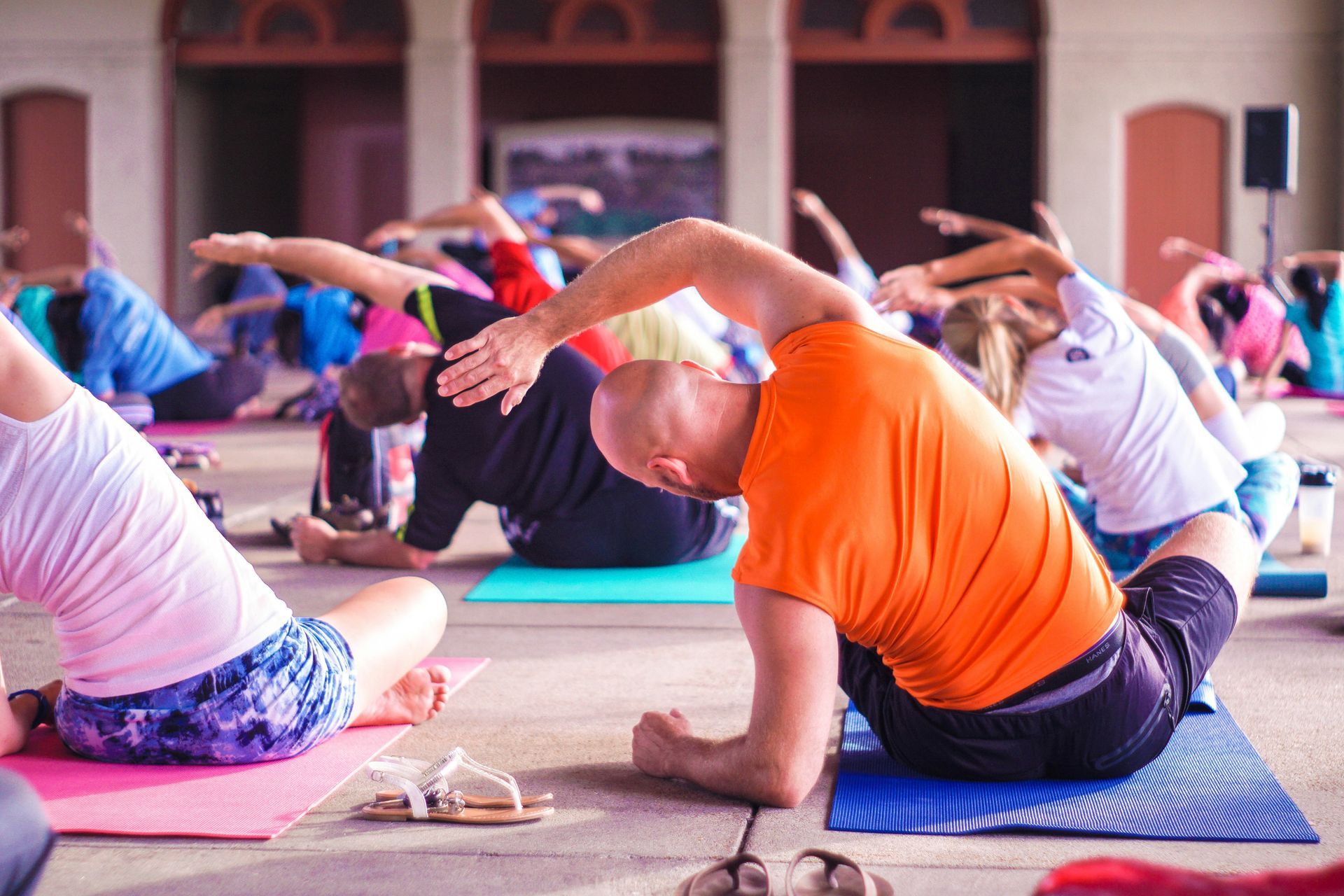
Perhaps the number one reason why I am so in love with yoga is it handed me one vital end of my hopelessly tangled holistic health string so that I could start to work things out at long last, after 53 years of struggle and pain. I was at the end of my rope, but yoga empowered me to reach out, grab the knot labeled
emotional regulation, and cling to my sobriety and sanity like the drowning woman I was.
Oh, lord, was it hard! However, grasping the tail end of that emotional regulation rope and staying sober by talking to the mat finally, at long last, enabled me to see the part I was playing in contributing to my own problems.
Everyone Blamed Me — After a While, I Blamed Them, Too
I’m unabashedly bawling while I’m writing this section, but that’s okay. I give myself permission to feel my feelings now, to let them pass through me, to process them instead of leaving them trapped in my body’s tissues where they linger like evil demons, wreaking unconscious havoc on me and everyone around me.
All my life, I’ve truly wanted to be normal. However, I was mislabeled as “gifted” at age four, courtesy of my late-August birthday and the convenience of getting me enrolled into school a year early if I was “ready.” I was ready, academically, at least. My mom took me to the summer library. I loved books, and the cognitive parts of my brain process at speeds that I’m pretty sure were faster than today’s most powerful AI when I was younger.
However, emotionally? Socially? I was nowhere
near ready. As much as I crave human connection, the social part of my brain runs very slowly. For example, I’m a professional at saying inadvertently hurtful things but not recognizing
why they caused the other person to feel bad until days later. Once the impact hits, it’s a tsunami of guilt that I don’t know what to do with, although I am learning how to apologize.
As a result, I never really had a friend group in school. Like many neurodiverse individuals, I drifted from group to group but never really fit in anywhere, a reality that didn’t help me develop social skills. By the time I reached my teens, I was terribly isolated. However, I was considered physically attractive, and it was the 1980s. I’ll just let that fact drop as sufficient evidence of why I have C-PTSD. To use the internet acronym, IYKYK. If you know, you know, especially if you were also an unidentified neurodivergent girl growing up during that era.
My trouble truly began at 14, when I entered the “official adult” world of work. Previously, I had helped my dad in his roofing business, which didn’t bother me other than making me exceptionally tired. Likewise, bussing tables wasn’t too bad, other than the fact that my other 14-year-old female coworker and myself were relentlessly sexually harassed by a 40-year-old balding cook.
That harassment led us both to flee to a grocery store across the street, and hello symptomology. It physically pains me to remember
how impossible it was to stand at the register, especially on a hard, concrete floor, for hours. Yet if I dared to so much as lean, let alone sit and put my feet up (as I was wont to do), the beratement began:
Stand up straight! Don’t look so lazy! What kind of impression are you making? You represent this store! You are an embarrassment and a disgrace! Why can’t you JUST…
These insults came from my managers. They came from my parents when I got home. While they didn’t come from my peers at first, eventually, they, too, joined in the chorus. After all, from their perspective, it
did look like I was simply being lazy. They didn’t know what was going on inside of me, and every time I tried to tell them, I was called a liar and accused of making up my symptoms. Why else would my symptoms just appear out of nowhere, then go away?
My Life in the (Utterly Unintentional and Blameless) Gaslight
As a result, I have basically lived 53 years inside the movie Gaslight.
I’d complain about feeling lousy, and everyone, literally
everyone replied not with concern but with, “Yeah, right. Too sick to work again, eh. You’re nothing but a lazy, slovenly slut.” My parents. My partners and former spouses. My coworkers. My
doctors,
the very people I went to for help (if I had a dollar for every antidepressant and pain medication I’ve been fed like a guinea pig while being told
it’s all in your head, I’d have no financial worries at all).
I was constantly accused of leeching off other people’s efforts, of refusing to
try, even though I was trying as hard as I could. After a while, I even began gaslighting
myself.
So I worked harder and harder, taking on more jobs, going back to school, anything in hopes of someday getting one of those coveted job positions that allow you to take time off to care for your health and the resources to seek professional medical care. At one point, I was working three jobs
and
going to law school full-time, while
still hearing and feeling that my troubles were all my own fault.
Long story short, I became a functional alcoholic, and my body crashed and burned
hard. My efforts never brought me closer to the relief I sought. The attempts, however, made me sicker and sicker until I was — I don’t even know how to describe it other than a creature, a robot, solely focused on physical survival to the exclusion of all else. Today, I am permanently disabled, as much as I still try to contribute to society.
As I got sicker, my emotions became more dysregulated. Here’s where yoga saved my life. I had all but given up on the medical profession and finding answers. I felt they dismissed me as just another “histrionic female.” But a still, small part of me whispered, “You’re not crazy.”
That voice spoke loudest to me when all others finally ceased, when I was safe in my sanctuary of yoga. It said, “Have you tried
this,” when I felt like I had already tried everything.
Although I didn’t consciously realize it, yoga was healing my nervous system
at the same time that it gave me insight into how my outward behavior made it difficult for others to help me. The first lesson was making the connection between my physical discomfort and my attitude. Although it may sound hard for folks to believe, I was honestly more terrified of making a scene or being treated like a liar than I was of pushing my physical limits. Simply teaching myself that
it was okay to say, “Hey, I need to sit down,” even when everyone else remained standing, was transformative. It instantly made others see me as less hostile, more “friendly, but a bit off.”
The other part was realizing that my behavior affected others just as theirs impacted me. Yes, everyone was ignoring my very real health issues, but
I was also acting defensively and refusing to listen to those who did offer aid. Yes, I was being dismissed by doctors, as countless women have been for centuries under patriarchal pseudo-meritocracy — but my combative attitude was only convincing them that I was deceptive, not that I truly needed help, and badly.
Don’t get me wrong: I still rage against the American healthcare system. There, my anger has not ebbed, for health is fundamental. I’m living proof that it’s impossible to flourish without it, but sadly our for-profit system makes it a privilege. Yes, Medicaid exists, but poor people often lack other resources, too, rendering it moot. Going to the doctor involves more than affording copays. It’s the time off work that hourly workers often can’t afford, not if they hope to make rent. It’s traveling to and from appointments, especially in rural areas, and waiting for an unpredictable length of time. Even though your actual visit with your physician might last two minutes, managing the logistics of the appointment may take the entire day. Folks who are already deciding between rent and groceries can’t afford to lose eight paid hours.
However, I was very wrong in blaming the people closest to me. Even though,
from my perspective, they treated me with unspeakably cruelty, I now see they didn’t understand what they were doing. They didn’t recognize the impact their actions had on me; they couldn’t. Although autism was known in 1972, it was woefully undiagnosed in girls. And one of the most common types of autonomic system disorder, POTS, wasn’t even identified until 1993, when I was 21.
I hate thinking I wasted nearly 40 years of my life. However, if nothing else, my existence can stand as living proof of one psychological theory:
the illusory truth effect [2]. It deals with repetition. Basically, if you hear something often enough, long enough, from enough outside sources, you start to believe it — even if it is patently untrue.
In other words, when not just one person but the entire
world
gaslights you, it’s pretty darn hard to see anything
but that gaslight.
I can’t speak for everyone, but for me, at least, I now consider the illusory truth theory a proven, scientific fact.
The Tilt Table Test and What It Revealed
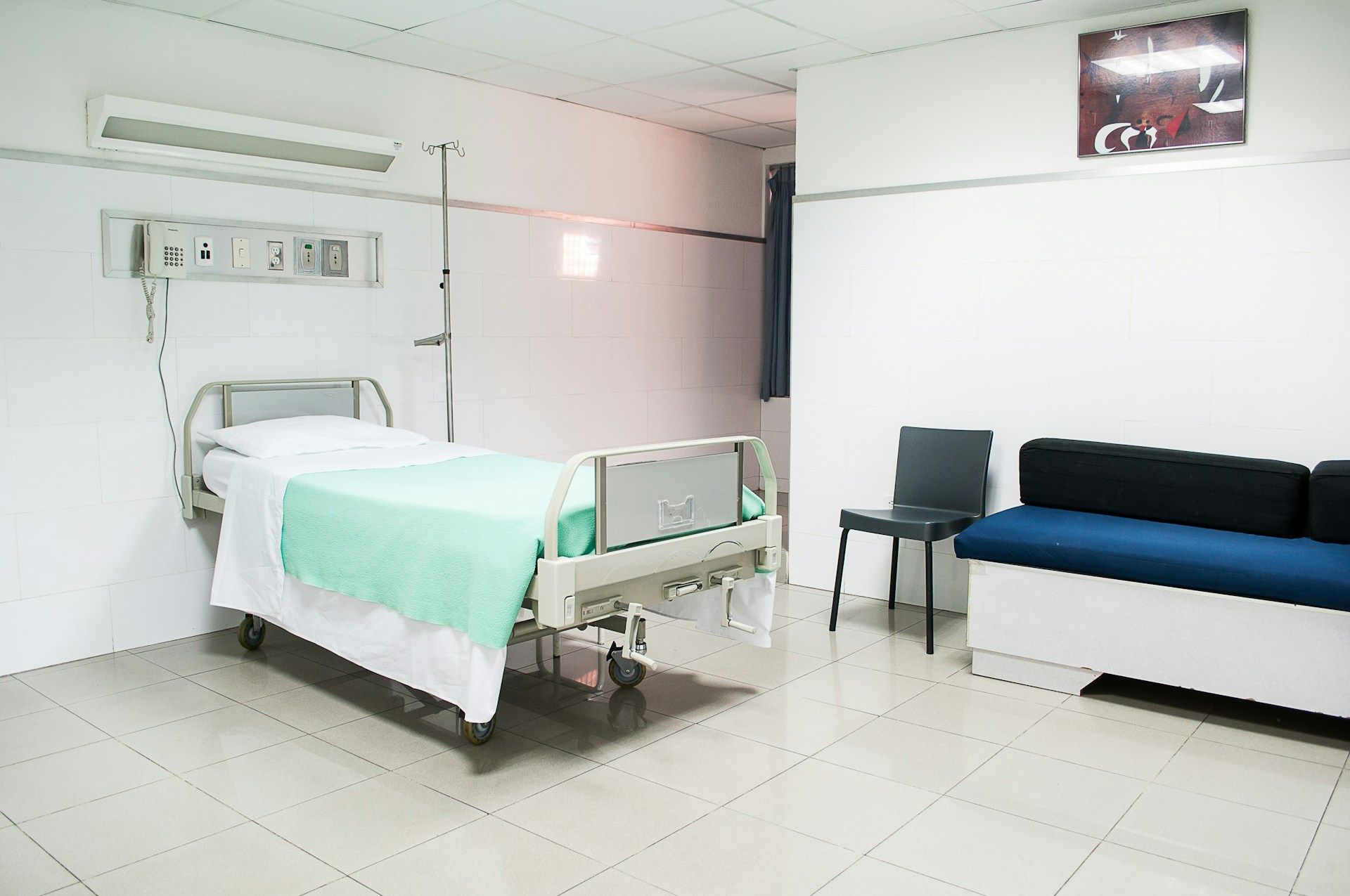
By the time they finally strapped me into the tilt table, I was terrified. I remember praying, “Please, God, don’t let this be yet another dead end,” even though I was convinced they would find nothing, and I would be back to square one.
At first, nothing was exactly what happened. The first part of the test was a breeze; I just lay there listening to my meditation music, and although I felt a bit like Hannibal Lecter going to visit the Senator being strapped to that board, it wasn’t unpleasant. It wasn’t too bad for the first minute or two after they popped me upright, either.
Then came the pounding headache.
Then the nausea. The sweats. The sick, weak, woozy feeling that I was going to pass out.
Still, I kept on deep breathing and trying to control my physical reactions. I was trying so hard not to exaggerate in any way. At one point, my arm dropped. Then my head fell forward, as I was unable to hold it upright any longer. I remember thinking, “Oh, great, they’ll think I’m being histrionic again, but
I swear to God I can’t help it!”
Finally, as what I think of as the “death moths” began fluttering behind my eyes, signalling an immediately imminent fade to black, I cried out, “Please put me down!”
“You need to go down now?” the nurse asked.
“Yes, please!” I begged with the best whisper-shout I had left, as tears began coursing down my face. Whatever it was that was going on with my body, it had just happened live and in the flesh, in front of numerous witnesses.
Apparently, the Wizard of Oz behind the magic curtain let the nurses know there was no need for them to administer the additional medication to prompt the desired results. They already had the evidence they needed.
When they lowered the tilt table, my heart rate was 39.
My blood pressure had plummeted, and I was in a pre-syncope state. The nurse said that I’d have blacked out within seconds had they not lowered me. She explained that just standing there talking with me, her natural heart rate held steady at 95 according to her Apple Watch, and she was young, fit and healthy. Your heart rate and blood pressure should increase and stay higher when upright so that the blood reaches your brain. For whatever reason, my body fails in this task, and the resulting lack of blood flow to my brain produces my symptoms.
I must pause in writing this to collect myself, as I still fall apart remembering this moment, after having been disbelieved for so long. Here was proof that, no, I hadn’t been making all this up for attention, even though I had heard various versions of that malign refrain so often, I had begun to believe it. I had honestly started to believe those evil accusations
were true, that I
had faked disability, despite feeling like death warmed over for a good part of every day.
However, I had never been lying about my symptoms. If anything, I had been minimizing their impact on me, not exaggerating it. And here was evidence. At last.
Coming to Terms With My New Reality and Embracing the Joys of Authentic Existence
Even now, after the truth of my condition has become known, my stubborn brain — I am extremely guilty of the stereotypical autistic rigidity of thinking patterns — still whispers, “Was it really that bad? Are you sure you couldn’t have tried just a little bit harder? Are you absolutely sure you weren’t exaggerating?”
However, now that I am armed with evidence, I am much better able to tell that voice to be quiet, or STFU, to use the internet acronym. That’s another sometimes frustrating quality of how my mind works. It insists, “show me,” but then still wants to go down a negative path. That I can change, though, and I continue to do my work on the mat and in therapy to retrain my neural pathways toward a more realistic, balanced, and healthy worldview.
That other people see the difference in me is undeniable. Everyone from my beloved partner to our dear friend and resident environmental engineer here at A Quiet Place has noted that it’s as if a 20-ton boulder has recently been taken off my back.
It feels that way to me, too. Don’t get me wrong: no one is happy to learn they have a health condition for which there are few treatments outside of lifestyle interventions. However, in the US, you must prove your disability to receive aid, which isn’t easy to get
or
keep, especially if your symptoms ebb and flow like mine, enabling you to do
some work — just not at a level where you can support yourself independently.
I’m very grateful, though, to live in a country where help is available, even if accessing it is all but impossible for some. However, systems can be improved, and humans have the power to make our existing processes better — if, that is, we are willing to listen to those most affected by the current flaws in said systems.
Processing It All on the Mat: Where Do We Go From Here?
I share my story today in the hopes that it can help educate and bring hope to others. I share so that other people with similar mysterious symptoms might feel a little less crazy, despite what others say. Think about it: the human body is an incredibly complex machine, so advanced we cannot currently come close to duplicating it with all our modern tech. The more complicated any machine grows, the more things can go wrong, and the harder pinpointing the root cause of the trouble can be.
I share so that doctors might have a little more compassion. Your patient doesn’t know what’s wrong with them, no, but they have to live in their bodies while they search for answers. Unfortunately, the reality of a for-profit health system means that yes, sometimes very sick patients will nevertheless continue to push themselves to pay rent, especially when they have no one taking care of them and realistically have no other choice outside of “give up and die.” Another unfortunate reality is that sometimes, patients wait anywhere from two months to two years to access two minutes of a specialists’ time. During that time, they had to function somehow. They arrive at your office with you as their last hope. All too often
for female patients [3], that hope gets dashed with a referral to psychiatry and a suggestion that the issue is all in their heads. Please consider that there may be something real and physical going on, even if a proper diagnosis takes time.
I share this especially so that other people don’t jump to conclusions about other people’s health or habits based upon their outward appearance alone. What has hurt me the most is
not my physical symptoms, unpleasant as they are. It’s been
the disbelief of others,
mixed with their suggestion that I was making up lies in an attempt to avoid labor. Yes, I do think Americans are often forced to work way too much than is healthy — but that truth can exist simultaneously with the fact that, all this time,
I really was sick.
Ultimately, I don’t want my story to be one of “oh, woe is me.” It’s why Ed and I continue our yoga channel. Much as we would like to go viral, we no longer hold unrealistic hopes of life-changing financial abundance. However, if we can help even one other person feel better, make one other struggling individual feel a little less alone, then all our efforts are worth it.
I try to contribute in other ways as well. Although I am disabled, I’m grateful for freelance gig labor in data annotation that I can do in brief spurts. While sitting for extended periods brings on symptoms, I can do a project, then get up and walk, stretch, or do a needed chore here at A Quiet Place to restore normal blood flow to my brain and other organs. I share the same fears of AI as many others. However, I also see how it has the potential to help humanity solve pressing problems, including ones we may no longer have time to sort out without a bit of technological help. I also see how it could be used as a tool to advance peace and democracy in the right hands.
Quite frankly, I’m also less afraid of AI these days because working with it makes me realize that it doesn’t do anything my brain doesn’t. I don’t know what the autistic experience is like for other women, but for me, my mind functions exactly like a LLM: It tries to synthesize
all the information it receives with its system instructions, to output a cohesive, sensible, readily understandable whole. It’s fabulous at recognizing patterns within the provided datasets, but it’s not “creating” anything. It’s just combining ingredients, baking a cake, and portioning out the slices.
In spite of everything I’ve been through, I’m still here. I’ve lost some time seeking answers, true, but I don't want to waste any more bellyaching over what might have been. I
exist. I have the answers I sought at last. I want to make the most of what’s left of this incarnation.
Believe it or not, I’m now closer than ever to believing that people are truly good at heart, even though for most of my life, I felt like the entire world was against me.
However, I would like for other people to hear my story and take whatever lessons they will from it. I know I have learned a lot from my journey. Perhaps my biggest takeaway is to avoid jumping to conclusions about other people or why they do what they do. After all, if my words and deeds have been so terribly misunderstood, how might I have misjudged the actions and words of others? In many ways, I became just as nasty to others as they were to me, and for that, I accept my guilt.
I’ve often said, “Don’t judge,” on various shows. What I really mean by that is “Don’t judge people.” Sometimes, of course, you have to. Had I not fled some of the toxic people and situations in my past, I probably would not still be alive today. You simply can’t argue with those who adopt certain rigid thought patterns, who decide they know better than you what's right for you. All you can do is get yourself out of the line of fire. Every set of circumstances is different, but sometimes, distance brings clarity.
However, we as onlookers are rarely privy to the totality of the circumstances that drive people to behave as they do. I think of all the times I grew impatient with what others thought was pleasant chit-chat. You never know what pain might be lurking behind someone’s outward smile, and you can be kind while simultaneously refusing to surrender your version of reality or your boundaries. It’s a delicate art, and it decidedly takes practice. These days, I feel a lot like a robot girl studying, “How to Be a Proper Human, 101,” but it’s a lot better than hating my entire species, myself included.
What I’d really like people to take away from my story is that kindness matters. “Empathy” has become a dirty word of late, but I’d like people to remember that it matters, too, perhaps more than anything. Yes. I needed access to modern healthcare to “prove” that what I was experiencing was real. However, what I needed most of all was one person, just one person, to believe in me and care.
We’re now in the Anthropocene. There are no more commons; those of us who don’t quite fit into mainstream society can’t just go off to our cottages in the woods alone and wait to die any longer, if we ever could. People need each other now more than ever, which is why kindness and empathy matter more now than ever.
I found that in my beloved. I found that in my beloved family here at A Quiet Place. You have no idea what it means to me to have real understanding at last. Many of us here have been through similar traumas, and we’re all healing together. It’s beautiful.
I want everyone else to be able to feel the peace I feel today. I’m very fortunate and grateful for the technology that empowers me to work from home. I’m grateful I have the opportunity to nurture this land as I heal myself, transforming it into a place of healing for others, as well. From here on out, I’m determined to do all I can to share my tale authentically with those receptive, and to do what I can to facilitate others in recovery by doing and providing what I can within my limitations. When I’m unsure what to do, I now know just where to go. I talk to my mat.
Thank you, tilt table from heaven and hell.
And thank you, dear reader, for reading.
Namaste.
References:
[1] “What is dysautonomia?” Dysautonomia International. ND. Retrieved May 20, 2026, from:
https://www.dysautonomiainternational.org/page.php?ID=34
[2] “The illusory truth effect: A review of how repetition increases belief in misinformation.” PubMed. October, 2023. Retrieved May 20, 2026, from: https://pubmed.ncbi.nlm.nih.gov/38113667/
[3] UN Women. “From misdiagnosis to medical bias: why women are living longer but not better.” April 7, 2026. Retrieved May 20, 2026, from: https://news.un.org/en/story/2026/04/1167259