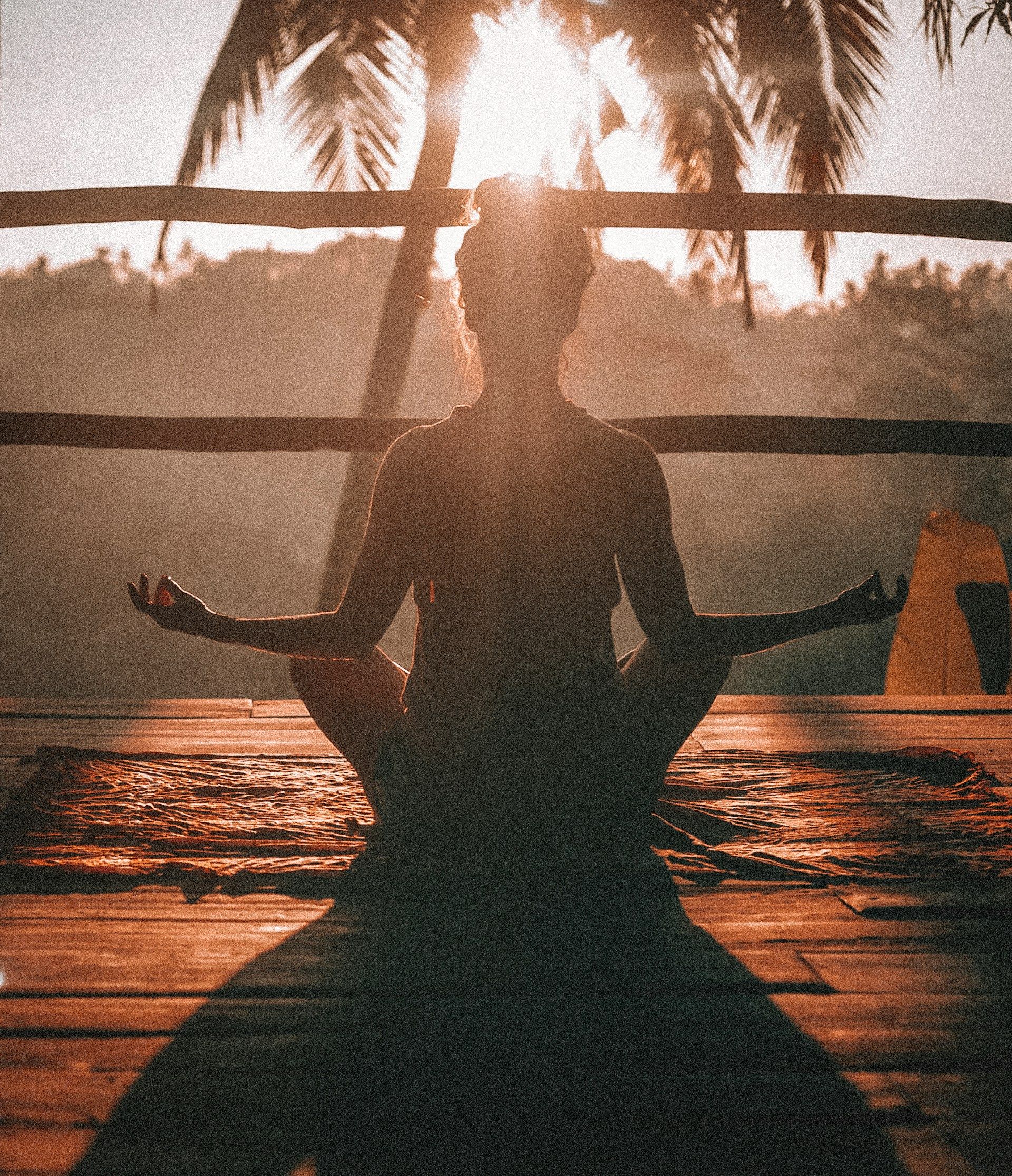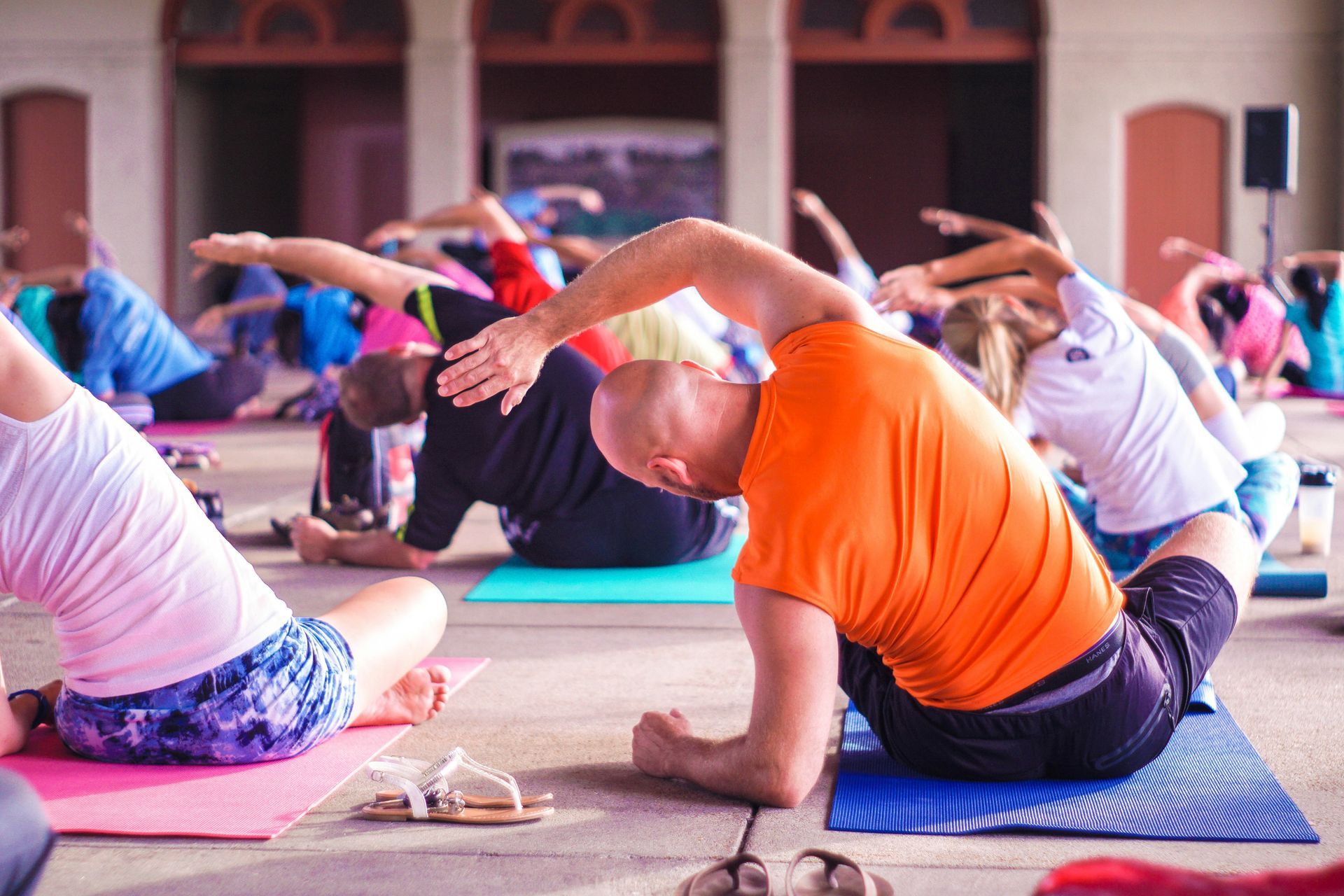
Sore Shoulders? Try This 10-Minute Stretch Routine

Jennifer Stanley • May 19, 2026

Whether your ache springs from a vigorous tennis session or long hours at the computer, this flow can help.

Even if you don't play golf or tennis, shoulder pain can strike. Even prolonged sitting, that curse of the modern office drone, can leave you aching. Fortunately, if you’ve got ten minutes, you can ease tension and pain while preserving your mobility with this simple, yoga-based stretch routine. 


1. Cat-Cow 

Begin on all fours. As you inhale, sink your belly to the floor, as if you were a cow with heavily laden udders sagging. As you exhale, round your spine toward the sky like a scared Halloween kitty.


Do it seated:
Scoot your bottom toward the edge of your chair, giving your spine room to bend backwards, and place your palms halfway up your thighs. Inhale as you lift your chest forward and up toward the ceiling; exhale as you round out your spine.


2. Tai-Chi Twists 

Stand or sit with your arms at your sides. Begin twisting your torso from side to side, allowing your arms to swing loosely, like pendulums or tassels, as you do so. If working from a sitting position, take care not to strike your arms against any hard surfaces. 


3. Shoulder Circles 

Allow your arms to dangle at your sides. Lift your shoulders up, let them drop back, then down, then front, creating a circle with this ball-and-socket joint. Repeat while moving in the opposite direction. 


Begin small, then add more of your arm into it, eventually allowing your circles to take up space. Imagine you had pencils on the tips of each finger, and your shoulder joint is a giant protractor, drawing a huge circle in space beside you. 


4. Eagle Arms 

Extend your right arm directly in front of you. Cross your left arm beneath your right, bending the elbow and circling it around your forearm, striving for a palm-to-palm position. 


Once your arms achieve this twist, think of pulling your elbows down and forward, away from your shoulders, fanning open the muscles of the upper back. Repeat on the other side.


5. Double Handcuff 

Begin standing or kneeling. Clasp your hands behind you, pushing your chest forward and your shoulders down and back. You may arch back slightly for a bonus stretch in your lower back (which feels especially lovely if your shoulders are sore from slouching).

Do it seated: Simply clasp your hands together behind the back of your chair and perform the same motion. It works better if your chair has a narrow back. 


6. Thread the Needle 

Begin on all fours. Elevate one arm, then thread it beneath the standing arm and armpit as you lower your chest near the floor. Feel free to keep your hips lifted or allow them to sink into a modified child’s pose.

Do it seated: Extend one arm in front of you, then bring it across your chest. Use your other hand to apply gentle pressure, but avoid pressing on the elbow joint. Hold onto the forearm or the upper arm instead.


7. Lying Shoulder Roll

Lie on the floor, face down, with your arms extended to either side in a “T” shape. Roll onto one side, creating a deep stretch across the front of the shoulder. Use your legs and your other arm to brace and support you in place while you breathe into the opening.

Do it seated: You’ll need a chair with a sturdy back. Grab onto one side of it with that hand and twist the opposite direction to create the opening in the front of the shoulder.


8. Earring Shrug 

During our flows, you might sometimes hear me remind you to avoid wearing your shoulders as earrings. Here’s one place where you want to don those dangly baubles. Simply shrug, pulling your shoulders as close to your ears as you can while you inhale and squeeze. As you exhale, relax, allowing your shoulders to sink down and back. 


9. Neck Half-Circles

Allow your chin to dip toward your chest. Gently roll your head to one side, taking care to avoid pushing your ear past your shoulder. Repeat to the other side. You can move slowly with the breath or hold to one side, perhaps extending the opposite arm to deepen the stretch down the side of the neck and top of your trapezius muscle. 


10 Blades to the Wall 

It’s time to align your posture. Find the nearest wall. Then, stand against it, allowing your shoulder blades and back of your head to touch. Take a deep breath. Then go out and tackle the rest of your day like the tall-standing, confident royalty you are. 


Yoga-Based Stretches for Sore Shoulders 

Whether your shoulder pain stems from too much activity or too little, gentle, yoga-based restorative stretching can sometimes ease your ache. Try this routine the next time you need to refresh your upper body and ease tension.



By Jennifer Stanley September 1, 2026
Worried about climate change? We are, too. Here are five mindful rituals that can mitigate your anxiety (somewhat) with positive actions that help the planet.
By Jennifer Stanley August 24, 2026
Mindfulness takes time. So does life. Every now and then, we need to pause, breathe, and get back in sync so we spend our time on what truly matters the most.
By Jennifer Stanley August 18, 2026
What can you do when you say, "I am," but your mind whispers back, "No, you're not?" Here's how my unusual brain solved this problem. Maybe it will help you, too.
talk to your mat every day
By Jennifer Stanley August 11, 2026
Why should you practice yoga every day, even if you only have ten minutes? Think of it as shutting down your computer: its a needed reset for your body's CPU.
Reclaiming Sunday fun day in the park
By Jennifer Stanley August 3, 2026
Your nervous system needs one full day off per week. Here's the science behind the reasons why and how a day of rest is essential to functioning at your best.
Tired at work? Try this miniyoga retreat at your desk
By Jennifer Stanley July 28, 2026
These five moves are a mini-yoga retreat you can do at work anytime without leaving your desk. Impress your boss while feeling better, body, mind and spirit.
Smilingwoman
By Jennifer Stanley July 20, 2026
It need not take long to regulate your nervous system and give your mood a positive boost. Try one of these eight tricks to revitalize your spark and smile.
A purple cabbage is sitting on top of a wooden cutting board surrounded by other vegetables.
By Jennifer Stefanow July 13, 2026
Can’t Sleep? Try This Evening Ritual (Updated for 2026) Written by Jennifer Stanley Few things in life are psychologically harder to cope with than insomnia. You know sleeplessness is going to affect you the next day. Worse is the anxiety that builds when it strikes night after night. You stumble through waking life like a zombie but curse the sight of your bedroom ceiling through your open eyelids at night. Although scientists don’t fully understand why living creatures need sleep, they know it harms your health when you don’t get enough. You become more accident prone, and your risk of various diseases increases. Plus, you get moody and snap at loved ones, straining your relationships As someone who struggles with insomnia, I empathize. While nothing health-related is guaranteed, certain habits and practices can nevertheless make it easier to get your Zzz’s. Try parts or all of this evening ritual the next time you can’t sleep or, worse, suffer a stretch of insomnia. What’s Causing Your Insomnia? Get Mindful Finding the root cause of your insomnia might be a no-brainer. An ailing loved one, a struggling relationship, work woes, financial troubles — all can impact sleep quantity and quality. If difficult life circumstances underpin your insomnia, radically accepting that you might find it hard to sleep for a while can sometimes, ironically, help. If not, at least it stops that nagging anxiety-choir of “what’s wrong with me, I’m exhausted, I know I need rest.” Acknowledging, “Hey, anyone would be struggling right now,” can be just the shot of loving-kindness your weary soul needs, and while it’s no substitute for eight solid hours, it’s better than fighting a losing battle with dreamland. Medicine, Food, and Hormones, Oh, My! At other times however, your insomnia might arise from physical or environmental factors you may not have considered. For example, medications as diverse as beta blockers [1], antidepressants and even cold tablets can affect sleep. Undiagnosed food allergies can likewise affect slumber by raising histamine levels [2] that promote wakefulness. If you suspect a sensitivity but can’t afford testing, the elimination diet method can sometimes pinpoint a culprit. Be patient and methodical, as it can take a while if you’re sensitive to something outside of the Big 8. Hormones are also a factor — shout out to my other 50-somethings experiencing night sweats. High cortisol levels are a common offender [3], hence, why it’s harder to sleep during life’s most stressful moments. However, keep in mind that changes in other hormonal levels, such as estrogen [4], can also cause cortisol fluctuations. If possible, consider a consultation with your doctor. If primary care offers few answers, a qualified naturopath or other holistic health practitioner may take more time to go over all over your symptoms and your life history to establish a course of care. Examine Your Daily Routine How you pace your day influences how well you sleep at night. In general, you want to tackle your toughest mental and physical activities soon after waking, taking on less stressful activities as you get closer to bedtime. Recently, some people have reported terrific success using the 10-3-2-1-0 sleep rule. What Is the 10-3-2-1-0 Sleep Rule? Dr. Jess Andrade, sports medicine physician, explains the 10-3-2-1-0 sleep rule [5] as a guide of activities to cease at specific intervals before bedtime to encourage more restful sleep. It works like this: Stop drinking caffeine 10 hours or more before bedtime. Caffeine blocks your adenosine receptors [6], a body chemical that builds up over the course of the day, making you sleepy. Finish your last big meal at least three hours before bed. Digestion can stimulate you, keeping you awake, and lying down too quickly after eating can trigger gastric reflux. Stop all work activities at least two hours before bed and begin your evening ritual. Turn off all screens at least one hour before bed, as it stimulates your mind and the blue light can keep you awake [7] by affecting melatonin. How many times do you hit snooze? Zero! That’s a big goose egg. Studies suggest hitting snooze doesn’t add to quality sleep and may extend morning grogginess [8], a condition called sleep inertia. The Role of Exercise What about exercise? Doesn’t a good daily workout help you get more rest? Yes, and exercise should absolutely be a part of your routine — with one caveat. Three hours before bed, cease all heavy physical activity. You can still include a gentle, soothing yoga routine, such as the one below, to ease you into dreamland. However, save anything that exerts your muscle power or gets your heart pumping for earlier in the day, as it keeps your core temperature elevated [9] and revs up your metabolism, which can make sleep elusive.
By Jennifer Stanley June 30, 2026
It’s America’s 250th birthday. You have plenty of options to celebrate. Here are ideas for the folks who enjoy something quieter and more mindful than fireworks.
Yoga
By Jennifer Stanley June 16, 2026
Get on down to improve your ability to get back up again.