Loving-Kindness Meditation for Yourself and the World

Jennifer Stefanow • October 11, 2024

Written by Jennifer Stanley


You don’t need anyone to tell you that the world is an increasingly hostile place. News of war and violence scream at you from headlines daily, even if you do your best to avoid them — they show up in your email, on gym televisions, on your Uber driver’s satellite radio.

It’s enough to make anyone feel more than a little hostile themselves.


However, yogis know peace begins within, by cultivating mindfulness and taking responsibility for what you can control — yourself. You can calm your body and mind through breath and movement, and in doing so remain serenely courageous through chaos.


Better, you can begin to shift the energy within you towards that of peace, creating a ripple effect that spreads to others, as attitudes are contagious. Practice this loving-kindness meditation for yourself and send good vibrations to a world that sorely needs them.


Postures for Sitting or Lying in Meditation

The best posture for this loving-kindness meditation or any meditation session is whatever makes you the most comfortable. There is no one “correct” meditation posture — it’s highly individualized. However, here are some classic poses to consider:


  • Vajrasana: This kneeling posture is similar to the hero's pose in yoga. Kneel on the floor, allowing the feet to separate. This pose may help with keeping your spine straight if other seated meditation postures
  • Sukhasana: This easy seated posture is similar to the criss-cross-applesauce pose you might have used as a kid sitting on the floor. Simply fold your legs in front of you, legs folded, with one slightly forward.
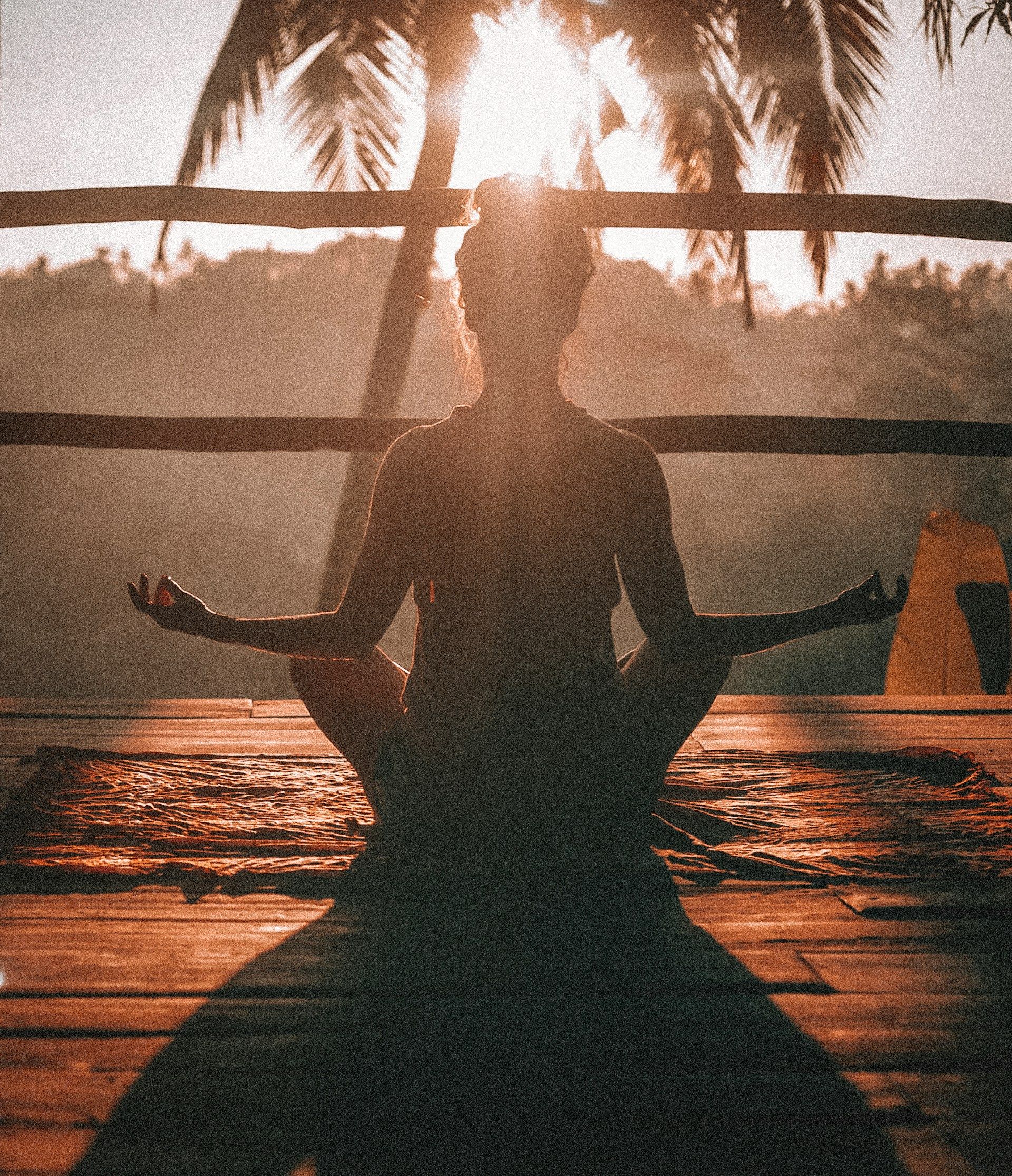
  • Lotus or a variation: Lotus is an advanced meditation posture that can help with spinal alignment, but it isn’t kind to everyone’s knees. You can also take a half-lotus, crossing only one leg on top of the other with the ankle toward the groin.
  • Savasana: Some people prefer to lie down during meditation (I’m one of them). If taking corpse pose or savasana, try keeping your head straight, as letting it fall to one side encourages sleep. It also helps to place a pillow or bolster beneath your knees, especially if you have lower back, hip, or knee pain.


Setting the Mood for Your Meditation

Experienced meditators can reach a contemplative state nearly anywhere, but most mere mortals do best in an environment conducive to relaxation. Dim the lights, perhaps using colored LEDs to create a rosy glow. Adjust the temperature and have a blanket handy, as you often become cool when seated or lying for extended periods. A little aromatherapy doesn’t hurt — rose, ylang-ylang and lavender are good scents to use for this meditation, as are any scents you find relaxing and nurturing.


Suggested Guided Loving-Kindness Meditation

Begin by taking several slow breaths, elongating your exhales slightly. You can center your awareness by counting backward from ten as you count your inhales and exhales, such as this: “Inhale, ten, two, three, four,” and, “exhale, ten, two, three, four, five.” Continue breathing this way until you reach one, repeating if necessary until you feel calm and relaxed.


Pro-tip: it sometimes helps to burn off physical energy before sitting in meditation. Going for a run followed by a stretching cooldown or practicing an invigorating vinyasa routine into deeper restorative stretches can mitigate stress hormone levels and get you in a better mindset — try it if you feel too restless to sit.


Once you feel a sense of inner peace descend, draw your awareness to your heart chakra, the center of your chest. Explore the sensations there. Can you feel your heart beating for you?


Next, visualize someone you love dearly. It may be a pet — I often reflect on the pure love that Poe, and all beloved pets, teach. Let that feeling of love build and grow.


As your aura of loving-kindness grows, extend that feeling of acceptance and compassion to yourself. Picture a rosy glow filling every cell of your body, energizing every fiber. Gradually extend this sense to others, beginning with those nearest and dearest to you. Visualize the light of love spreading to your neighbors, colleagues, and even those people you find distasteful.


Continue letting this feeling of loving-kindness grow and emanate from you. Visualize it spreading so that it envelops the entire world, entering the hearts of those engaged in war and violence and transforming them with awareness. Imagine a planet in peaceful coexistence as if it were reality.


Gradually reconnect with the world around you by wiggling your fingers and toes as you exit your meditation. Take several deep, 3-part breaths, letting first your belly, then your diaphragm, and finally your chest expand before parting your lips and sighing your exhale. Blink your eyes open and smile warmly at the world.


Spread Love to Yourself and the World With This Meditation

You can repeat this meditation any time the world’s ugliness tears at your soul. Think of it as defensive armor for your soul, safeguarding against the bitterness that can easily creep in when news of death and despair bombard you.


Peace and loving-kindness begin within each one of us, and you can’t spread what you don’t feel. By generating compassion for ourselves and others on the mat, we can’t help but carry that emotion forward into daily life, spreading serenity, acceptance, and joy to everyone we touch.

Ease Into Your Meditation With a Little Yoga for Peace


Do you need to burn off a little restless energy before meditation? Try this yoga for peace routine to gradually calm your central nervous system and induce a more peaceful mental state in yourself before spreading it to others. 
By Jennifer Stanley August 18, 2026
What can you do when you say, "I am," but your mind whispers back, "No, you're not?" Here's how my unusual brain solved this problem. Maybe it will help you, too.
talk to your mat every day
By Jennifer Stanley August 11, 2026
Why should you practice yoga every day, even if you only have ten minutes? Think of it as shutting down your computer: its a needed reset for your body's CPU.
Reclaiming Sunday fun day in the park
By Jennifer Stanley August 3, 2026
Your nervous system needs one full day off per week. Here's the science behind the reasons why and how a day of rest is essential to functioning at your best.
Tired at work? Try this miniyoga retreat at your desk
By Jennifer Stanley July 28, 2026
These five moves are a mini-yoga retreat you can do at work anytime without leaving your desk. Impress your boss while feeling better, body, mind and spirit.
Smilingwoman
By Jennifer Stanley July 20, 2026
It need not take long to regulate your nervous system and give your mood a positive boost. Try one of these eight tricks to revitalize your spark and smile.
A purple cabbage is sitting on top of a wooden cutting board surrounded by other vegetables.
By Jennifer Stefanow July 13, 2026
Can’t Sleep? Try This Evening Ritual (Updated for 2026) Written by Jennifer Stanley Few things in life are psychologically harder to cope with than insomnia. You know sleeplessness is going to affect you the next day. Worse is the anxiety that builds when it strikes night after night. You stumble through waking life like a zombie but curse the sight of your bedroom ceiling through your open eyelids at night. Although scientists don’t fully understand why living creatures need sleep, they know it harms your health when you don’t get enough. You become more accident prone, and your risk of various diseases increases. Plus, you get moody and snap at loved ones, straining your relationships As someone who struggles with insomnia, I empathize. While nothing health-related is guaranteed, certain habits and practices can nevertheless make it easier to get your Zzz’s. Try parts or all of this evening ritual the next time you can’t sleep or, worse, suffer a stretch of insomnia. What’s Causing Your Insomnia? Get Mindful Finding the root cause of your insomnia might be a no-brainer. An ailing loved one, a struggling relationship, work woes, financial troubles — all can impact sleep quantity and quality. If difficult life circumstances underpin your insomnia, radically accepting that you might find it hard to sleep for a while can sometimes, ironically, help. If not, at least it stops that nagging anxiety-choir of “what’s wrong with me, I’m exhausted, I know I need rest.” Acknowledging, “Hey, anyone would be struggling right now,” can be just the shot of loving-kindness your weary soul needs, and while it’s no substitute for eight solid hours, it’s better than fighting a losing battle with dreamland. Medicine, Food, and Hormones, Oh, My! At other times however, your insomnia might arise from physical or environmental factors you may not have considered. For example, medications as diverse as beta blockers [1], antidepressants and even cold tablets can affect sleep. Undiagnosed food allergies can likewise affect slumber by raising histamine levels [2] that promote wakefulness. If you suspect a sensitivity but can’t afford testing, the elimination diet method can sometimes pinpoint a culprit. Be patient and methodical, as it can take a while if you’re sensitive to something outside of the Big 8. Hormones are also a factor — shout out to my other 50-somethings experiencing night sweats. High cortisol levels are a common offender [3], hence, why it’s harder to sleep during life’s most stressful moments. However, keep in mind that changes in other hormonal levels, such as estrogen [4], can also cause cortisol fluctuations. If possible, consider a consultation with your doctor. If primary care offers few answers, a qualified naturopath or other holistic health practitioner may take more time to go over all over your symptoms and your life history to establish a course of care. Examine Your Daily Routine How you pace your day influences how well you sleep at night. In general, you want to tackle your toughest mental and physical activities soon after waking, taking on less stressful activities as you get closer to bedtime. Recently, some people have reported terrific success using the 10-3-2-1-0 sleep rule. What Is the 10-3-2-1-0 Sleep Rule? Dr. Jess Andrade, sports medicine physician, explains the 10-3-2-1-0 sleep rule [5] as a guide of activities to cease at specific intervals before bedtime to encourage more restful sleep. It works like this: Stop drinking caffeine 10 hours or more before bedtime. Caffeine blocks your adenosine receptors [6], a body chemical that builds up over the course of the day, making you sleepy. Finish your last big meal at least three hours before bed. Digestion can stimulate you, keeping you awake, and lying down too quickly after eating can trigger gastric reflux. Stop all work activities at least two hours before bed and begin your evening ritual. Turn off all screens at least one hour before bed, as it stimulates your mind and the blue light can keep you awake [7] by affecting melatonin. How many times do you hit snooze? Zero! That’s a big goose egg. Studies suggest hitting snooze doesn’t add to quality sleep and may extend morning grogginess [8], a condition called sleep inertia. The Role of Exercise What about exercise? Doesn’t a good daily workout help you get more rest? Yes, and exercise should absolutely be a part of your routine — with one caveat. Three hours before bed, cease all heavy physical activity. You can still include a gentle, soothing yoga routine, such as the one below, to ease you into dreamland. However, save anything that exerts your muscle power or gets your heart pumping for earlier in the day, as it keeps your core temperature elevated [9] and revs up your metabolism, which can make sleep elusive.
By Jennifer Stanley June 30, 2026
It’s America’s 250th birthday. You have plenty of options to celebrate. Here are ideas for the folks who enjoy something quieter and more mindful than fireworks.
Yoga
By Jennifer Stanley June 16, 2026
Get on down to improve your ability to get back up again.
kittens
By Jennifer Stanley June 2, 2026
Life and love go on if you mindfully create the space and time for them. Please help us welcome our two new furry family members to OIS yoga and A Quiet Place.
By Jennifer Stanley June 2, 2026
Hey yogis! There's a very good reason the human nervous system intrigues me. Here's how yoga helped me figure out the last and final piece of my health puzzle.